March 2025
Arctic, once the periphery of global politics and a symbol of untouched nature, nowadays represents one of the key hotspots of the new geopolitical competition. As the ice sheet melts, not only resources, but also the new paths of power are uncovered. The climate crisis, in this context, functions as a catalyst of political processes: it simultaneously changes geography, economy, and the security structure of the region. This opens up a series of questions regarding the resilience of international institutions to the changes that are not hypothetical anymore, but have become systemic.
Until 2025, the Arctic transformed from a space for scientific cooperation into an arena in which the interests of Russia, the United States, China, Norway, Canada, and other actors, such as the European Union and India, intertwine. In other words, the region no longer functions as a laboratory of global coexistence, but now is an experimental field for testing new forms of political and military presence.
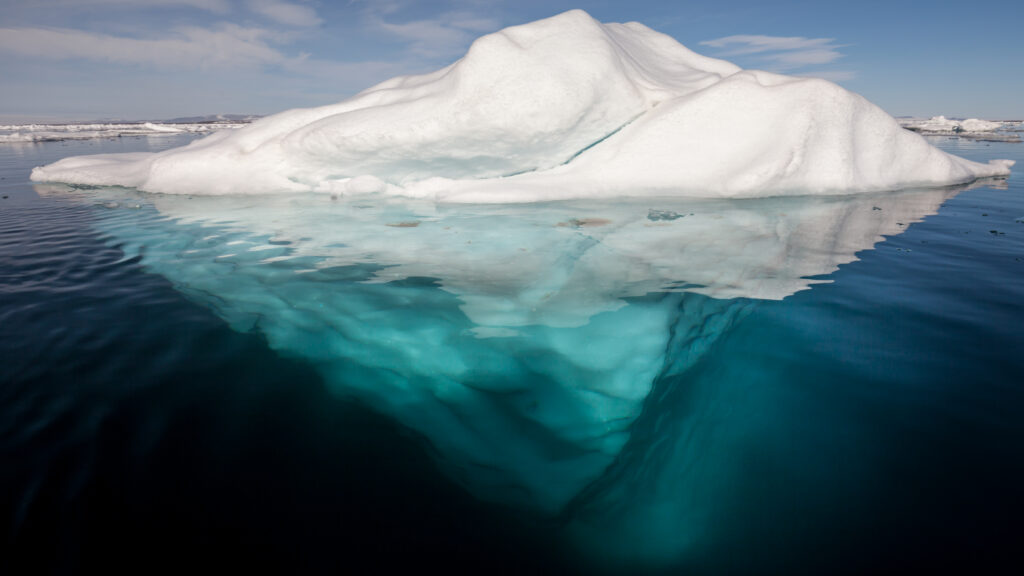
The temperatures in the Arctic are increasing at more than twice the rate compared to the rest of the world. Such a change acts as a virus of instability, infecting both the energy and the security system. The reduction of the ice sheet is prolonging the sailing season, thus making the Northeast Passage a true competition to the Suez Canal. This opens up a series of questions regarding the redistribution of global trade and long-term consequences for the countries controlling the Arctic coasts.
In 2024, Russia significantly broadened the infrastructure along its Arctic coast. New bases, radar stations, and monitoring systems are formed. Moscow perceives the Arctic as a future axis of energy and military power, but also as a segment of the immunological response to sanctions. The Arctic 2035 Strategy implies the integration of the region into the model of economic self-sufficiency, with Chinese support in the field of transport and energy. In other words, the Arctic is becoming a therapeutic instrument in the process of the economic recovery of Russia.
China, even though it does not possess an Arctic coast, is positioned as a “nearly Arctic state”. In the last five years, it invested in research missions, icebreakers, and infrastructure projects in Greenland and Iceland. Its interest surpasses the economy; we are speaking of an immunological response to a decades-long domination of the West in global management.
According to the data provided by the US Geological Institute, the Arctic contains around 13% of the world’s undiscovered oil reserves, as well as 30% of gas reserves, of which more than half is contained in the Russian sector. The LNG exploitation projects in Yamal and Gidan peninsulas are a part of the energy restructuring strategy after the war in Ukraine. In other words, the energy circulation of the Arctic is becoming a vital organ of the Russian economic system.
At the same time, the militarization of the region intensifies. The Soviet bases in the Novaya Zemlya and the Kotelny Island are renewed, and the Northern Fleet gained the status of a separate military district. Even though Moscow interprets these moves as defensive, the reality shows that this is a gradual creation of the NATO deterrence zone. In the West, a similar process is reflected in the increase in the number of military drills and the broadening of the security infrastructure, especially after Finland and Sweden’s accession. This opens up a series of questions about the limits of military balance and the resilience of the regional “security immunity”.
Today, the Arctic is the space of “soft militarization”, where the civil, energy, and military infrastructure intentionally intertwine. In other words, the region functions as a complex organism in which it is difficult to distinguish the vital functions from the defense reflexes.
The role of Denmark, Norway, and other smaller actors is becoming increasingly important for understanding the balance between economic use and security obligations. While Denmark is balancing between the Chinese investments and NATO pressure, Norway is increasing the military cooperation with the US, but it still maintains communication with Moscow to preserve the minimum of predictability.
On a diplomatic level, the Arctic Council is in a state of functional paralysis. Since the suspension of Russia in 2022, this mechanism no longer serves its regulatory function. This opens up a series of questions about the ability of international bodies to maintain institutional immunity in the conditions of political cooling off.
The climate crisis is no longer a scenario assumption, but a clinical fact. The meltdown of the permafrost is destabilizing the infrastructure, causing ecological disruptions, and setting in motion the migration of the northern communities. However, the countries react to this through security instruments, and not through cooperation. In other words, the climate becomes a new weapon – a tool of pressure and control over resources and information.
The number of patents for Arctic technologies has doubled in the last three years. Scientific cooperation, once a sign of a healthy social immunity, nowadays is being transformed into a process with the element of technological competition.
The European Union is attempting to define its own approach to the region. While the northern members stress the security and environmental protection, the southern states perceive the Arctic as a potential source of energy. This opens up a series of questions about the cohesion of the European political DNA.
Despite the declarative support for the “Green transition”, in practice, there is much investment into technologies for gas and rare minerals exploitation. In other words, the European energy policy is showing the symptoms of a chronic contradiction between the ideology and economic practice.
Until March 2025, Arctic has confirmed that the climate is no longer an ecological issue, but the question of power. While the ice is melting the borders away, the countries are drawing them back, but this time, based on resources, technology, and control. The region functions as a reflection of the global order, in which the multilateral models are falling apart, and the logic of spheres of influence is spreading like a virus.
If the international community does not establish a new, inclusive mechanism for managing the Arctic, the risk of forming the first front of the new Cold War is becoming real. In other words, in a world that is losing the ability of a collective immunological response, the Arctic has become its most sensitive tissue.
Author: Miloš Grozdenović