
August 2025
The United States of America is entering a period of enhanced strategic challenges in the Indo-Pacific after the Taiwan elections, because the new political configuration in Taipei is changing the dynamics of relations with Beijing and calls for a more precise adaptation of the American regional engagement. The result of the elections came from the continuity of the pro-sovereign policies of Taiwan, which is perceived by Beijing as an additional stressor in its political environment. This opens up a series of questions regarding whether Washington can maintain a delicate balance between deterrence and avoiding escalation, especially at a moment when the Chinese political DNA is being shaped around a long-term strategy of unification.
In this context, the United States of America is attempting to activate an entire specter of instruments of power – military, diplomatic, economic, and technological – to strengthen regional stability. However, the Taiwan elections brought along an additional complexity into the Indo-Pacific security architecture, because the results strengthen the political course perceived by Beijing as unacceptable. In other words, Washington now must react in an environment in which the Chinese reaction becomes faster, more decisive, and more integrated into the wider strategy of pressure on the neighboring island area. In such circumstances, the virus of instability can penetrate the regional circulation, especially if the communication channels remain limited or overburdened by incidents in air or naval space.
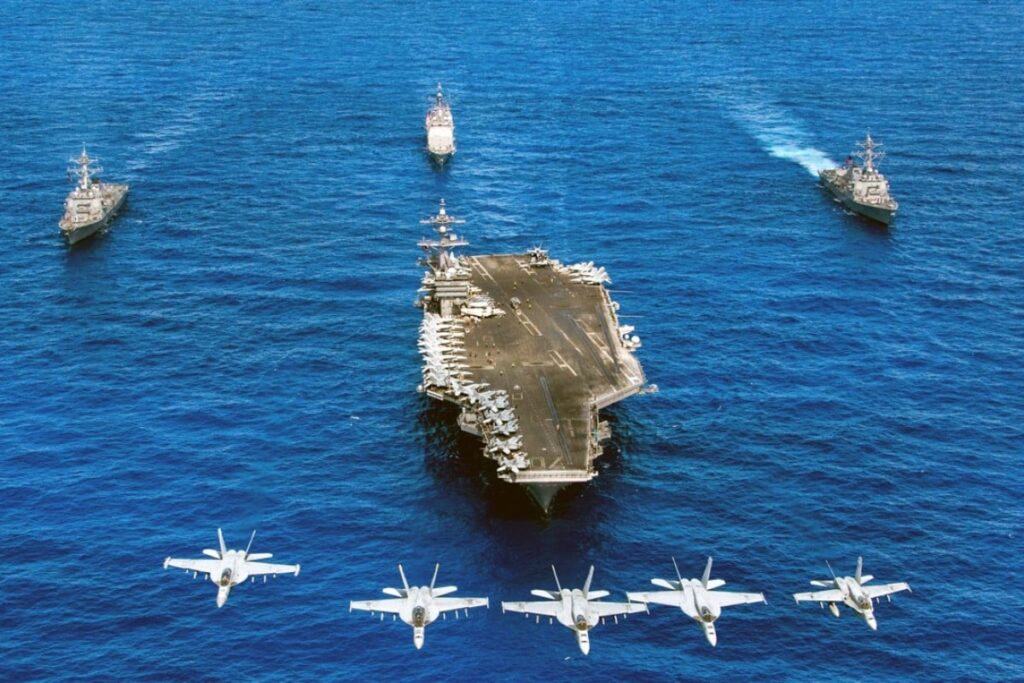
Exactly because of that, the US are intensifying their activities directed towards deterrence, including modernization of the regional positioning of the forces and intensification of coordination with key allies. Washington is increasing the frequency of joint drills with Japan, South Korea, Australia, and the Philippines, at the same time deepening its trilateral formats that should ensure a fast reaction in times of crises. This opens up a series of questions about whether these arrangements enable a sufficient depth of strategic action in relation to the Chinese capacities, which are increasing at a fast pace. Moreover, a question arises whether the regional social immunity against escalation impulses is strengthening or weakening the shift of the perception of risk among local actors.
The political context changes as well. China is heightening the pressure through economic instruments, information activities, and more intensive military patrols around Taiwan, thus testing the tolerance threshold of regional countries. The American politics must respond to these challenges without hindering the economic interests of countries that are trying to balance between two forces. In other words, Washington is moving through a space in which allies and partners are seeking security guarantees, at the same time avoiding direct classification that would expose them to Chinese countermeasures. This opens up a series of questions regarding the sustainability of the American model of partnership in the region, especially when the arms trade, investments into infrastructure, and trade relations flow into both geopolitical directions.
At the same time, American politics must pay attention to the internal dynamics in Taiwan. The new political mandate brings along a defined vision of relations with Beijing, but also the need to preserve the internal cohesion, economic development, and the integrity of democratic institutions. In this context, Washington is strengthening its political and security support to Taipei, but it still has to avoid making the impression of inciting unilateral moves that would increase the risk of conflict. This opens up a series of questions regarding how the US could maintain stable communication on both sides of the strait, while the Chinese policies are increasingly being linked to the narrative about the historical mandate of unification.
The military dimensions of the American engagement are becoming more and more significant. The Pentagon is accelerating the adaptation of the force redistribution concept, development of network abilities, and investment into unmanned platforms that enable fast reaction in times of crises. The American strategy wishes to create a deterrence structure that reduces the Chinese ability to launch a fast attack and increases the price of a potential operation against Taiwan. In other words, the US is attempting to construct an environment in which each Chinese step towards using force would become strategically risky. This opens up a series of questions about whether this architecture will be sufficient in the conditions of accelerated Chinese technological development and reallocation of capacities in the Western Pacific.
The economic factors play a significant role in shaping the US strategy. Washington is attempting to reduce its technological dependence on China through the control of exports of advance chips and limitation of access to Chinese companies to the American market. This approach should construct a more resilient economic system that reduces the transition of Chinese economic growth into a military advantage. However, many countries of the Indo-Pacific remain deeply integrated into the Chinese economic structures, which limits the space for American initiatives. This is opening up a series of questions regarding whether the US will be able to ensure sustainable alternatives for regional economies that rely on the Chinese trade and investments.
At the same time, China is constructing its own network of influence through infrastructural projects, trade agreements, and security arrangements that offer a different model of regional integration. Washington must respond to all these processes with an offer that is economically competitive and politically attractive, especially in the countries of Southeast Asia that wish to avoid sharp alignment. In other words, the regional actors seek stability and development, and wish less to participate in the rivalries of grand powers, which is shaping the space for future American moves.
In the geopolitical sense, the Taiwan elections represent a turning point because they signal the continuity of a political course that supports firmer cooperation with the West. China perceives this as a strategic challenge that calls for more decisive reactions. Washington must balance between its own support to Taiwan and their need to prevent wrong assessments in Beijing. This opens up a series of questions regarding how the US will position in terms of eventual Chinese moves that surpass the border between pressure and coercion, as well as whether Washington will have sufficient diplomatic, military, and political space to maintain stability without entering confrontation.
In conclusion, the US strategic challenges in the Indo-Pacific after the Taiwan elections are shaped through a combination of military, political, and economic factors that require precise coordination and long-term vision. The countries of the region expect Washington to offer security without intensifying rivalries, while China insists on the fact that the issue of Taiwan should remain the central element of its political identity. In other words, the US is entering a period in which each decision will have consequences for regional stability, and the ability to limit the spread of the virus of instability in the Indo-Pacific will become the key test of American foreign policy in the years to come.
Author: Miloš Grozdanović