
September 2025
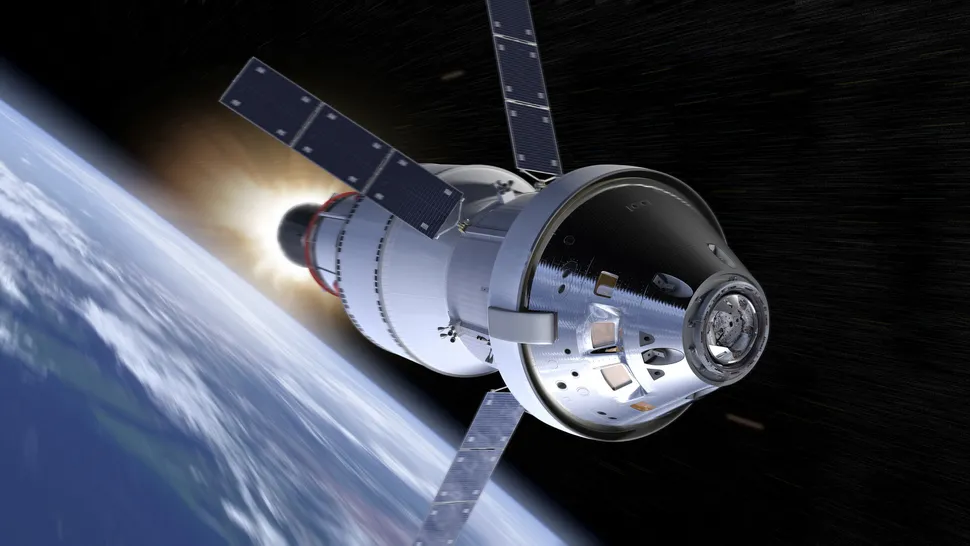
Five decades after the last human footstep on the Moon, the Artemis II mission is entering the focus as a technological result, but also as a signal of the new global dynamics. The return of the crew into the Moon’s orbit seems as a test of operational stability of SLS and Orion systems. At the same time, this is a starting point of a broader redistribution of power in which the space is transformed into a polygon for the “encryption of power”. Each technological decision becomes a part of a wider architecture of global security.
The new phase of space exploration does not follow the logic of the Cold War competition the multipolar model shapes the new environment. The United States are strengthening the Artemis program as a framework for connecting allies, but also for defining norms. China, Russia, India, and other countries, are developing their own projects and creating alternative networks of cooperation. In such an environment, the significance of the “algorithmic politics” is on the rise – a set of rules, procedures, and protocols through which the great powers tend to control the flow of technology and access to resources.
Artemis II thus becomes more than a demonstration of technical precision. It enters the broader strategic narrative. The allied countries – Canada, Japan, Australia, and the ESA partners – are using this program as a means for strengthening political relations. In accordance with that, China and Russia are developing the project of the International Lunar Research Station (ILRS). The two initiatives represent different models for managing space resources. The American framework strives towards a more open exchange, while the Chinese-Russian model stresses control, centralization, and digital sovereignty.
Thus, the space transforms into an extension of geoeconomy. Resources, data, and infrastructure are no longer exclusively technological elements. They are becoming strategic elements of power. The discovery of ice water on the Moon provides a development potential to future missions. But it also opens up the question of ownership. The Artemis Accords are attempting to define the rules for exploitation. Critics warn of the risk of violating the 1967 terms. The states agreeing to these agreements see an opportunity for technical integration with the US.
The private sector is accelerating these processes. SpaceX, Blue Origin, and Axiom Space are developing models in which the borders between states and corporations are diminished. Such an approach is hanging the structure of risk. Breakdowns, obstructions, and attacks against space systems are gaining a new dimension, because the infrastructure is passing from a state monopoly into a hybrid ecosystem. In such a structure, the “digital sovereignty” is becoming the key point – the ability to control, protect, and maintain the critical orbit under one’s own standards.
Artemis II thus enters the zone which surpasses science. While countries are developing new systems, the concerns over space militarization are on the rise. Navigation, communication, and monitoring systems depend on resilient networks. Cyber-attacks against satellites or command centers might cause serious incidents. The risk could escalate, especially in the case of deterioration of relations between the US and China. The space could become a widened front in which incidents are provoked via protocols, signal interference, and attempts of takeover of critical systems.
At the same time, the issue of managing artificial intelligence arises. Automation of research and exploitation introduces new standards. The differences in technological capacities between countries are increasing the possibility for asymmetric development. The artificial intelligence systems that are used in navigation, maintenance, and intelligence gathering are creating technical advantages that could turn into a geopolitical advantage.
The geopolitical image projected into the orbit is constantly changing. Artemis II functions as a precise diagnostics tool. It shows how the global system fragments and how countries are using the technology to strengthen their position. This process resembles a digital architecture in which each component represents a node in a network of power. The balance depends on how these nodes are linked and how they spread.
At the same time, the significance of ethical issues arise. Numerous initiatives for commercial resource exploitation demand for new norms. Without regulations, the risk of conflict increases. That is why the question arises whether the countries will succeed to construct a stable framework that prevents the transfer of Earthly conflicts into the orbit.
Artemis II is the signal of transmission into a new phase. The return to the Moon in 2025 defines the future relations between technological powers. In this phase, science, politics, and industry function as an integrated system. The borders between them are not clear anymore. The space is becoming a territory in which the resilience of the global system is tested. If the logic of competition is avoided, a path towards joint management could open. If the current trend persists, the space will become the new arena of divisions. In both cases, Artemis II remains the key node of future relations.
Author: Aleksandar Stanković