
January 2026
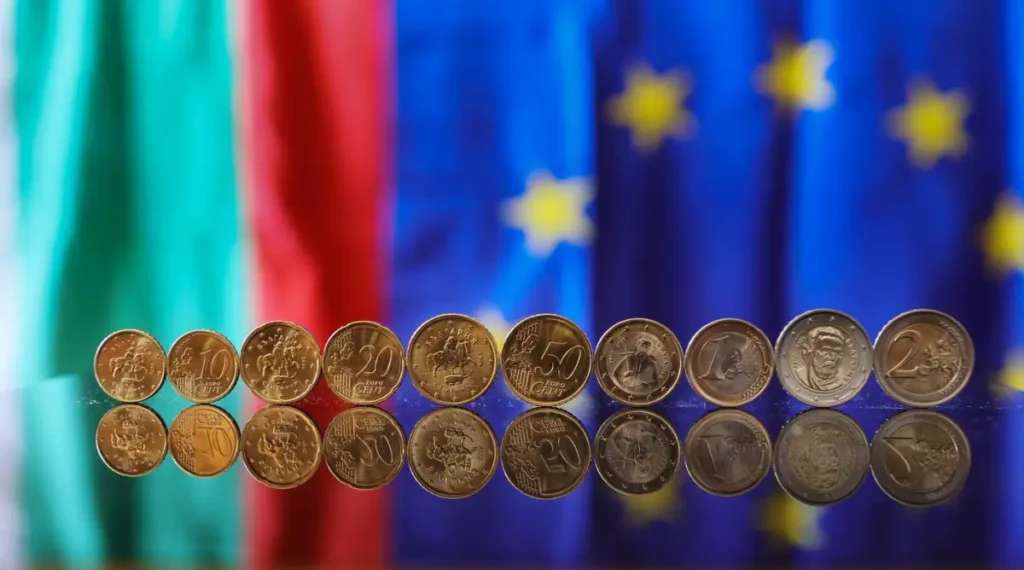
On January 1, 2026, Bulgaria introduced the euro and thus formally entered the narrowest core of European monetary integration, thereby closing a long and often politically burdened adjustment process that for years simultaneously functioned as a technical project of economic convergence and as a symbolic act of confirming the country’s strategic orientation towards the European Union. This step should not be seen exclusively as a monetary change, but as a political-economic event that reshapes the way in which Bulgaria participates in European flows, both financially and in a broader institutional sense, because the country’s position within the European security architecture of economic stability also changes with the entry into the Eurozone.
From an economic point of view, with the introduction of the euro, Bulgaria eliminated the currency risk, which, despite the long-standing currency board and the attachment of the lev to the euro, still represented a latent obstacle for some investors and financial actors. In doing so, the country sent a signal to the markets that it accepts not only the common currency, but also the discipline that comes with it, including tighter fiscal coordination and greater exposure to Eurozone-level surveillance mechanisms. Such a move increases the predictability of the business environment, reduces transaction costs in cross-border trade, and strengthens the integration of the Bulgarian financial sector into European capital flows, which is particularly important for the economy, which is still trying to catch up with more developed members of the Union.
At the same time, this process should not be idealized. Bulgaria enters the eurozone at a time when the eurozone itself is going through a phase of reviewing its own crisis management instruments, and the experiences of previous years show that the common currency does not act as an automatic stabilizer in conditions of structural weaknesses. This is precisely why the Bulgarian case raises the question of whether the euro will function as a productivity catalyst or as a framework that will expose existing institutional deficiencies, especially in the areas of the rule of law, administrative efficiency, and the fight against corruption, which remain chronic topics in the reports of European institutions.
The social dimension of this process requires equal attention, because monetary integration never remains limited to technical aspects. Part of the Bulgarian public perceives the euro as a logical step and a confirmation of the country’s European identity, but another part expresses concerns about possible price increases and the loss of monetary sovereignty, whereby these fears are often articulated through political narratives that combine economic skepticism and widespread dissatisfaction with political elites. In this regard, the way the government communicates the effects of the introduction of the euro becomes a key factor in preserving social cohesion, because the perception of injustice or unequal distribution of costs can easily turn into political polarization.
The Bulgarian political scene entered this phase without a complete consensus, but with a clear institutional decision, which creates a specific dynamic in which the euro appears simultaneously as an instrument of stability and as a potential trigger for new political discussions. In this sense, the introduction of the common currency acts as a form of controlled chaos, in which the state consciously accepts short-term tensions to strengthen its position within the European Union in the long term, counting on the fact that the economic benefits will, over time, neutralize the initial resistance.
At the level of the European Union, Bulgaria’s entry into the Eurozone has a wider significance that goes beyond the national framework. He confirms that the Eurozone enlargement process is still working, despite the crises that marked the previous decade, and sends a message to member states that are still outside the monetary union that integration is possible with political will and technical preparation. At the same time, this move strengthens the eastern wing of the Eurozone and contributes to greater homogenization of the Union’s economic space, which has implications for the EU’s ability to act as a coherent actor in global economic relations.
In the short term, the Bulgarian authorities are faced with the task of carefully monitoring prices and inflationary trends, as this is precisely where the greatest risk of social discontent lies. The experiences of other countries show that the perception of rising prices, even when statistical data do not confirm significant deviations, can have a strong political effect. That is why the government must combine regulatory measures with a clear communication strategy in order to prevent the economic transition from becoming a question of trust in institutions.
In the medium term, the success of the euro’s introduction will depend on the Bulgarian economy’s ability to use increased financial stability to boost productivity and technological development, rather than relying solely on low labor costs as a comparative advantage. If the country succeeds in linking monetary stability with structural reforms, the euro can become a lever for deeper integration and modernization. If this is absent, the common currency will function as a neutral framework that will not solve deep-seated problems by itself, thus reaching the analytical depth of the crisis in which monetary policy can no longer compensate for institutional weaknesses.
Ultimately, Bulgaria’s adoption of the euro represents a test of political maturity and social endurance, both at the national and European level. The outcome of that test will not be measured only by price stability or investment growth, but also by the ability of the political system to maintain the trust of citizens during the adjustment period, because that is exactly where the dividing line lies between successful integration and permanent ambivalence towards the European project.
Author: Miljan Petrović