
January 2025
In the first half of the 2020s, Africa has become a new center of geoeconomic attention, not because of its traditional ore and energy base, but for its position in the global critical minerals supply chain – cobalt, lithium, copper, and rare minerals, which have become indispensable in the production of batteries, renewable energy sources, and advanced military technologies. Exactly this energy transition – seemingly “green” and “sustainable” – has created a new type of mining dependency, in which Africa is playing the role once played by the Middle East in times of oil boom.
China, the United States, the European Union, and Russia are nowadays leading the race for access to African resources, but with essentially different approaches. Beijing continued to dominate, relying on the “resources for infrastructure” model: Chinese state companies and banks are building roads, power plants, and ports in Congo, Zambia, and Guinea, among other places, in exchange for access to mining fields. This model not only ensures a continued inflow of raw materials but also spreads the economic and political influence of China in the region. Contrary to that, the West is attempting to construct “alternative supply chains“ to reduce dependence on Chinese domination. The US is investing in strategic reserves and influencing partner sources, while the European Union insists on contracts that include standards of value addition and sustainability. African countries, aware of their own potential, are increasingly often reacting with a new wave of resource nationalism – revising concessions, introducing export controls, and demanding local processing, in an attempt to keep the majority of gains within their borders.
However, this dynamic does not come without a risk. The concentration of production in just a few countries – such as DR Congo, which supplies the world with the majority of global cobalt – makes the supply chains significantly vulnerable to political instability, regulatory changes, and market shocks. At the same time, the growing aspirations towards resource nationalism can short-termly discourage investors and lead to a project freeze. The geopolitical race between China and the West threatens to fragment the global market further, thus creating parallel systems of production and supply, which we are already seeing in the battery technology sector.
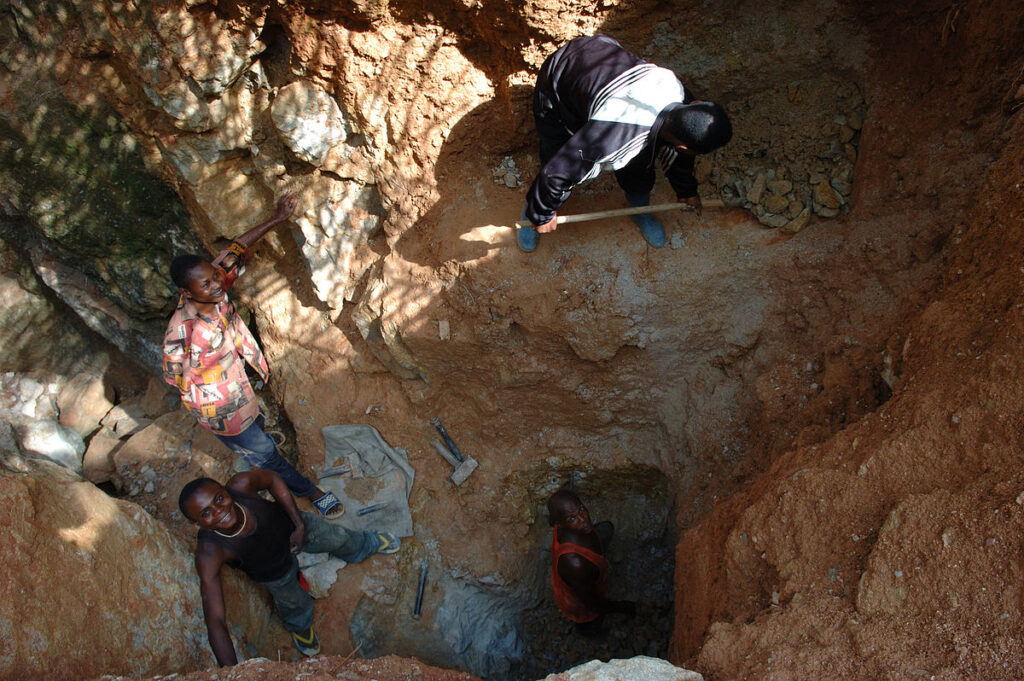
Social and ecological aspects must not be ignored. African communities are increasingly often becoming the victims of exploitation and pollution, because the lack of regulations and informal mining processes leads to the destruction of lands and the eruption of local conflicts. If a clear architecture of protection of the environment and just income distribution are not constructed, the continent could easily become the new arena of “Green colonialism”, where global interests compete under the guise of sustainability.
From an energy security standpoint, the implications are deep. Technological dependence on African minerals is becoming a new form of geostrategic vulnerability: the one who controls the mines also controls the future of electromobility, batteries, and energy grids. At the same time, price fluctuations and political risks can cause new inflation waves and disruptions in the global energy industry.
This is why it is necessary to change the paradigm. African countries must develop transparent fiscal and regulatory models that will balance between national interests and investment attractiveness. Foreign actors, on their side, should offer investments that are not only fast but also fair – based on technology transfer, local processing, and social responsibility. The private sector, on the other hand, must adjust to the new reality of the ESG standards, ensuring that sustainability is not only a marketing addition but also a prerequisite for a legitimate business model.
Africa stands today at a crossroads – between the historical chance to become the center of energy and industrial development, and the danger of remaining just a peripheral source of raw materials in the new global cycle of dependency. Its future depends on how much it succeeds in turning its mineral wealth into an instrument of its own industrialization, and not into a means of foreign power. In an age when batteries are becoming the new oil, mines are the new geopolitical fronts – and Africa, for the first time in decades, has the opportunity to dictate the terms of the game, if it turns the energy transition into a policy of development, and not a new form of dependence.
Author: Miloš Talović