
February 2025
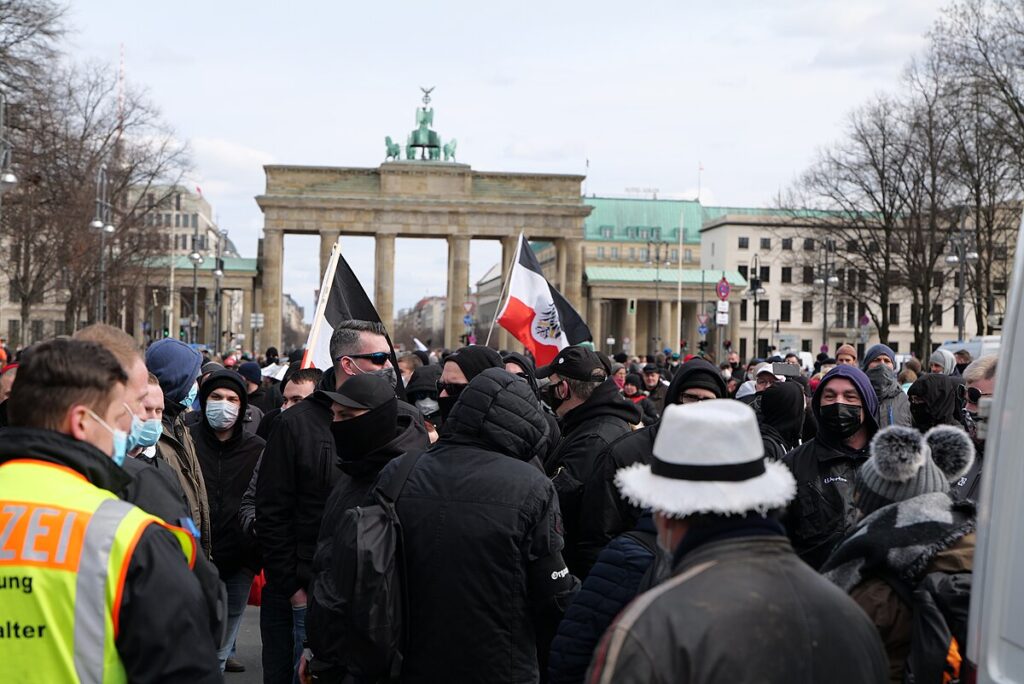
The winter months of 2025 are bringing along a series of upsetting phenomena in European societies. From Berlin to Copenhagen, to Paris, a wave of protests and violent incidents is capturing states which, until recently, were deemed as symbols of institutional stability and democratic maturity. The attacks on political representatives, the upsurge of mass demonstrations, and the radicalization of public space show that Europe is going through a deep internal crisis of trust in its own democratic model. This opens up a series of questions about the resilience of the European social immunity to political and social shocks.
Even though protests lay in the foundation of the democratic dynamics, the events that took place in 2024 and the beginning of 2025 show a change in the pattern: a transition from symbolic to systemic violence. In Germany, numerous physical attacks were registered being conducted against Parliament members originating from the parties of “Green” and the Social Democratic Party, as well as an attempted attack on the premises of the right-wing Alternative for Germany (AfD). In France, the demonstrations against economic reforms transformed into clashes with the police, while the extreme left-wing and right-wing groups started using similar mobilization methods. In Denmark, an attack against the Prime Minister Mette Frederiksen in August 2024 marked the first direct physical attack against a member of the Government in the modern history of this country. In other words, political violence is not coming from the margins anymore, but it is entering the institutional bloodstream of European democracies.
These events are not isolated incidents but a symptom of deeper social and political processes. The pandemic, the energy crisis, and the increase in living expenses left a permanent mark on the social organism of Europe. The economic pressures and the erosion of trust in institutions have created conditions in which an increasing number of inhabitants sense that the system is not reacting to their needs. This opens up a series of questions regarding the connection between the perception of injustice and the readiness of the individual to opt for violence as a form of political articulation.
The digital space is the catalyst for the existing tensions. In all the previously mentioned countries, we have identified stronger coordination between street movements and online communities that promote a narrative about the “betrayal of the elites”. The platforms such as X (formerly Twitter) and Telegram are becoming the channels for organizing protests, but also for spreading disinformation and hate speech. In other words, digital infrastructure is functioning as a nervous system of contemporary politics – it is simmering down reactions, at the same time increasing the risk from uncontrolled impulses.
The security agencies of numerous countries are warning of this new phase of political radicalization. The German Office for the Protection of the Constitution (BfV) is registering overlap between the extreme right-wing, anti-government activities, and anti-globalist networks. French intelligence services stress the increase in coordinated campaigns directed towards diminishing the trust in institutions, while the Danish police, for the first time, is using the term “info-violence” to explain the phenomenon of digital harassment of politicians. This is opening up space for a series of questions regarding the ability of the existing democratic mechanisms to adapt to new forms of political pressure.
The states’ responses remain uneven. Germany is attempting to balance between preserving public order and protecting the right to protest, but the application of restrictive legal measures is inciting discussions regarding the limitation of civil freedoms. France is facing accusations for excessive use of force, while Denmark, for the first time, is introducing units specialized for the protection of ministers. In other words, the European democracies are developing self-defense reflexes, but this process points to the fact that social immunity is growing weak when institutions are under continued stress.
The essential problem is not in security, but in its perception. An increasing number of citizens are perceiving the state not as a protector, but as an entity defending its own interests. This is opening up a series of questions about the transformation of the political DNA of European democracies and the limitations of their ability to regenerate. Political violence seen in 2025 is no longer a simple expression of dissatisfaction but a systemic disorder seizing the core of democratic functioning.
In other words, Europe is currently in a phase in which the virus of instability is spreading throughout its political organisms. If a new social consensus is not established and dialogue mechanisms are not strengthened, the risk is not in a sudden revolution, but in a gradual weakening of the vital functions of democracy.
Author: Miloš Grozdanović