
February 2025
The Democratic Republic of Congo (DR Congo) is once again at the epicenter of the African and international security agenda. After more than two decades of chronic instability in the North Kiwu and Ituri provinces, in the previous few months, we have witnessed a new escalation of conflicts between the DR Congo Armed Forces (FARDC) and the rebel Mouvement du 23 Mars (M23). This conflict, formally ethnic and political, has factually grown into a geopolitical struggle for control over resources of global significance, thus confirming the theory on the existence of the “resource curse“ throughout the African continent.
The M23, whose core consists of Tutsi rebels, according to the report of the United Nations Security Council from December 2024 (S/2024/969), enjoys a strong military and logistics support of Rwanda, which is additionally destabilizing the region. In public discourse, Kigali is officially denying direct participation, but satellite images from the field, testimonies of local officials, as well as seized weapons, show systemic support from the neighbourhood. On the other hand, Kinshasa is accusing Rwanda not only of destabilization, but also of organized exploitation of mineral wealth in the eastern part of the DR Congo, and predominantly coltan, cobalt, and gold – resources which have become pivotal in the era of energy transition and digital economy. These energy resources, instead of being the source of restoration, have become the fuel that is further accelerating the fire consuming the soil of the DR Congo, like hidden wealth nurturing the flame of instability.
According to the UN, DR Congo possesses over 70 percent of the world’s reserves of coltan and around 50 percent of the world’s reserves of cobalt, which undisputedly makes it an irreplaceable supplier in the production of batteries, electric vehicles, and semiconductor components. This is exactly why the conflict in DR Congo has become more than a local tragedy – it is a part of a wider process increasingly often called the “mineral cold war” by the analysts.
While the People’s Republic of China (PR China) is investing in the stability of delivery through infrastructure and mining projects – especially through companies such as China Molybdenum Co. and Zijin Mining Group, the United States of America and the European Union are looking fast for alternative supply chains to reduce dependence on Chinese control over critical materials.
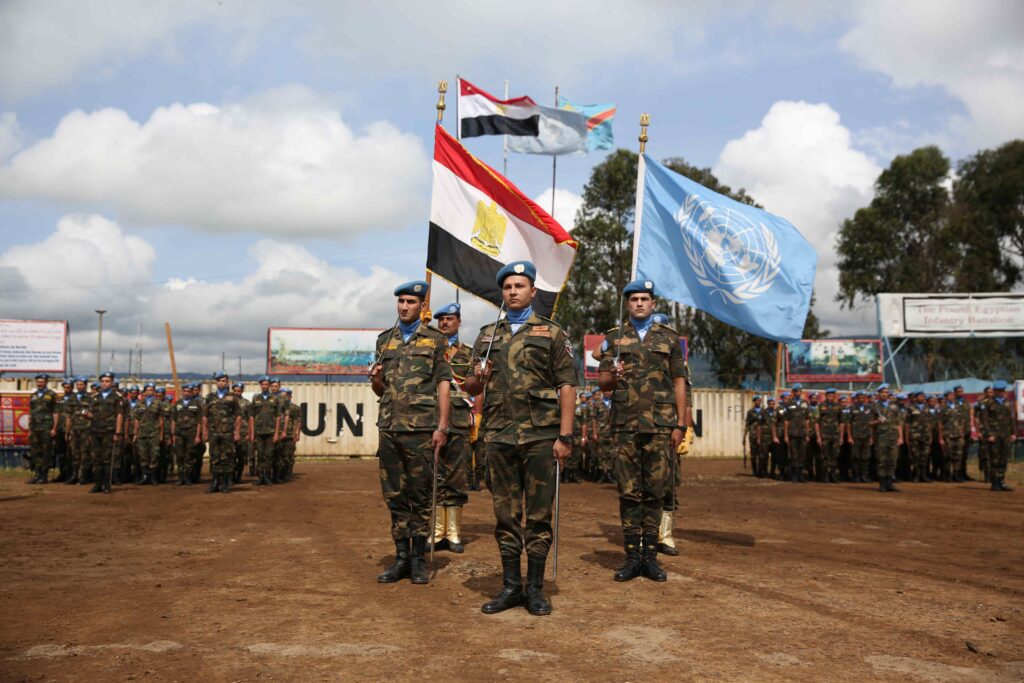
At the same time, the internal dynamics of the DR Congo are witnessing the weakening of state capacities. Namely, the previously announced withdrawal of the UN mission MONUSCO from the DR Congo, previously planned to take place at the end of 2024, has been postponed for one year, with an extension of the mission’s mandate. Still, if the withdrawal of the mission still happens, it is expected that it will create a significant security vacuum, which would, without a doubt, be filled by rebel groups. In some regions, the civilian government is almost nonexistent – instead of state institutions, local militias are governing the territories, collecting taxes, and controlling the mining sector. Such a problem statement has led to a drastic increase in violence against civilians, recorded daily. According to UNHCR and “Doctors without Borders” (Médecins Sans Frontières), more than seven million people are displaced, of which five million internally, while in some zones, a drastic increase in sexual violence as an instrument of intimidation and control is recorded.
The regional dimension of the conflict is further complicating the situation. In the presence of members of the Ugandan and Burundian Armed Forces, which are present in the country under the auspices of the East African Community (EAC), the interests of the allies are becoming less and less aligned. Namely, while Uganda is conducting offensives in the context of combating the rebel group ADF (Allied Democratic Forces), the reality in the field is showing that these operations, in fact, most often have an economic background and are being conducted in the ore exploitation zones for establishing control over mining zones and transport corridors.
In the end, the clash of the multilateral approach is becoming more and more visible. Namely, the African Union has many times attempted to negotiate between Kinshasa and Kigali, albeit without any concrete results. Peace negotiations under the mediation of Angola have minimal chances to contribute to the stabilization of the region due to the existence of deeply rooted distrust, as well as the asymmetric goals of the actors. While Kinshasa is insisting on the withdrawal of M23 and an international investigation into the role of Rwanda in inciting violence through providing logistical and military support to this group, Kigali is demanding security guarantees and demobilization of anti-Rwandan-oriented militias acting against Kigali from the territory of the DR Congo.
Currently, the humanitarian consequences of this conflict have a significant potential to grow into one of the most serious crises on the African continent in this decade. According to the WFP (World Food Programme), more than 25 million people in DR Congo are dependent on humanitarian aid, while access to basic services in numerous regions is limited. Moreover, disruption of trade flows and a drastic decline in the export of minerals are additionally burdening the national economy.
Looking at the wider context, it is indicative that the conflict in the DR Congo represents a meaningful picture of contemporary conflicts, linking security, resources, and geo-economics. In the process of dissection of this conflict, obvious limitations of regional integration structures are revealed, as well as the inability of the international community to successfully respond to hybrid threats – those in which ethnic tensions, crime, resources, and geopolitical interests intertwine.
Unless a stable framework is built that combines security guarantees, economic reintegration, and transparent management of natural resources, the Democratic Republic of Congo will remain an “open wound” on the body of the African continent. In other words, the fate of the DR Congo remains a test of the maturity of African institutions and the sincerity of the international community, which continuously promotes the discourse on “local solutions” for African problems.
Author: Tanja Kazić