March 2025
By the beginning of 2025, Turkey will be entering the phase in which it is simultaneously getting weaker and stronger, since its geopolitical paradox functions both as a source of power and vulnerability, depending on the side from which you look at it. The Northern horizon is closed off by the war in Ukraine and the energy competition in the Black Sea, while in the South, it spreads along the familiar instability – Syria, Iraq, and the Eastern Mediterranean. Each spot resembles a controlled chaos that could last forever if not directed well enough. Ankara is no longer playing the role of an intermediary between the East and the West, but is taking up the role of a player who draws moves in the space in which the interests of all possible blocs clash, using this to spread its own influence.
Regarding this, when you look at the continuity and transformation of its foreign policy since 2022 to the beginning of 2025, we can see that Erdoǧan is not giving up his famous strategy of “balance of pressure“, given that it provides for Turkey to maintain its notion of autonomy in the times when the war in Ukraine is prolonging, and the conflict in Syria is cooling down, but not ending. The war in Ukraine, in fact, puts Ankara in the middle of one of the most complex diplomatic jigsaws of our times – a NATO Member which do not follow all Western directives, but still succeeds in remaining important in the security architecture of the Black Sea.
“The Black Sea Grain Initiative” from 2022 might seem wasted, but it was the perfect example of how Turkey uses the crisis to create an analytical depth of the crisis – a symbol of ability to bring together the warring parties, but also to transform this bridge between them into a political platform for strengthening global influence, especially in relations with the countries of the Global South. After the Russian withdrawal from the initiative at the end of 2024 and new attacks against the Ukrainian ports, Turkey is once again opening up the old question – how to balance between the Russian gas and the NATO Alliance, which is becoming increasingly demanding? The energy corridors, from the Turk Stream to LNG terminals, are transforming into an extension of foreign policy. Regarding this, the presence of American Forces in Romania and Bulgaria acts as a reminder that the Turkish maneuvering space is narrowing more and more.
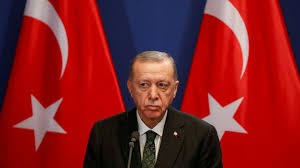
Erdoǧan is still playing his old tricks – he is not letting Turkey fall into the binary world of conflicts between the West and Russia. He is treating Moscow as a much-needed partner, Kyiv as a political capital that can be cashed in, and NATO as a mechanism Turkey uses to create pressure, and not to become its object.
On the Southeastern front, while the global attention remains glued to Europe, Turkey is strengthening its military presence in the northern part of Syria and northern Iraq. After the “Claw-Sword” Operation, launched at the end of 2024, the strategy of low-intensity continues – it is enough to show power, and it continues with the strategy of low-intensity, but low enough not to enter into war. The goal is clear: to prevent the strengthening of Kurdish formations supported by the US, and at the same time to leave an open channel towards Damascus, but only under Turkish conditions.
Russia, busy with dealing with Ukraine, is leaving the terrain to Iran and its militias, which Ankara perceives as a threat to its southern part. That is why it is combining military control with “soft power” – reconstruction, infrastructure, schools, and economy. It is a model described in Ankara already as “stability through domination”, and even though it is acting temporarily, it is increasingly resembling a long-term project.
Turkey today seems like a country that does not choose sides but rules. In this sense, the neo-Ottoman pragmatism is becoming its trademark – a mixture of historical nostalgia, economic pragmatism, and diplomatic engineering which enables it to sit at all tables, without any obligations to stay at any of them. This is where the layer of securitization of everyday life begins – when the foreign policy flexibility becomes an internal narrative on power and stability.
The price of such a game, of course, is an increasing isolation from the EU and tense relations with Washington. Erdoǧan is mending his relations with the Arab monarchies, waving his hand towards Cairo, but is still moving along the line that is breaking on each of his steps. It is questionable not whether Turkey will choose a side, but how long it can maintain balance without falling.
At the beginning of 2025, Turkey stands between the two crises shaping the twenty-first century – the Ukrainian front as a paradigm of the Cold War and the Syrian conflict as a chronic post-American chaos. And in this meeting point, it is attempting to maintain its version of balance between dependence and sovereignty, security and influence.
If Russia is playing the game of “endless winter”, Turkey is playing the game of “balance without peace” – a state in which the controlled chaos is becoming the source of power, and the crisis is treated as a means of rule. And there, in this balance of rises and falls, emerges the true essence of the Turkish geopolitics of 2025 – walking on the edge and loving it.
Author: Miljan Petrović