
May 2025
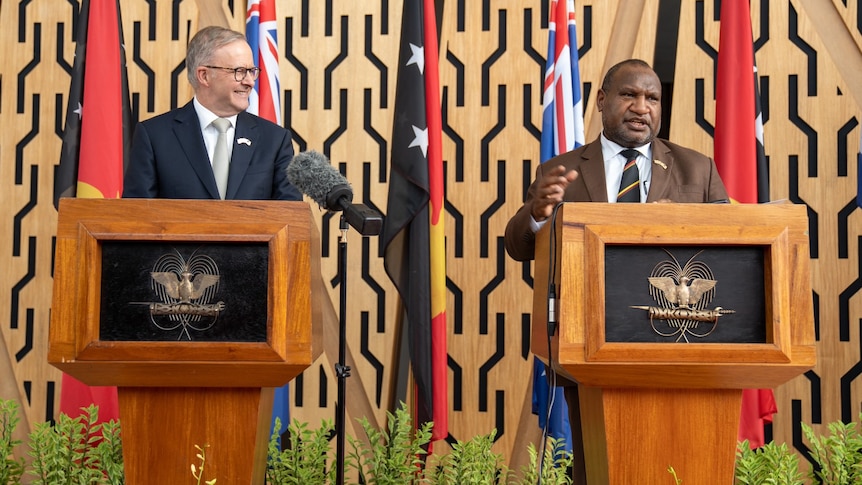
In mid-2025, the signing of the broadened security accords between Australia and Papua New Guinea marks a new phase in regional relations and indicates the existence of a growing “virus of instability” in the Indo-Pacific. Port Moresby states that this is a partnership of development and stability, while Canberra stresses the strategic response to the influence of third actors. In other words, Australia tends to prevent the penetration of China into its direct geostrategic environment. This opens up a series of questions about the dynamics of power in the southwestern Pacific.
Papua New Guinea, as the largest Pacific island state, with a population of more than nine million and a joint naval border with Australia, is entering a phase in which its political DNA is becoming an important factor in regional calculations. The new security cooperation, which includes joint patrols, modernization of infrastructure, and construction of bases, is restoring the Australian military influence to the level not seen since World War Two. In other words, a new defense bow is being created, from Darwin to Solomon Islands. This opens up a series of questions regarding the long-term autonomy of Papua New Guinea.
The geographical position of Papua New Guinea remains unique. The state is located between the Indo-Pacific corridor and the Malay Archipelago, and functions as a bridge between the Southeastern Asia and the Pacific islands. The economy, dependent on the export of resources such as gold, zinc, LNG, and wood, relies to a great extent on Chinese investments. During the previous decade, China invested more than eight billion dollars into infrastructure and mining. This opens up a series of questions on the level of dependence that is already built into the political DNA of the country.
Despite the economic link with Beijing, the political leadership is clearly seeking a security balance. After the signing of the security accords between the Solomon Islands and China in 2022 and the Chinese offer of military training to other Pacific countries during 2023, the fear of the “spread of the shadow” is becoming more pronounced in Port Moresby. In other words, there is an increasing fear of a weakening of the social immunity to foreign pressure. This opens up a series of questions regarding the sustainability of the state’s foreign policy.
Prime Minister James Marape now stresses that the new alliance with Australia is purely defensive, but the document itself show presence of clauses regarding naval routes monitoring, exchange of intelligence, and temporary positioning of the Australian forces in the northern coastal areas. In other words, the operational integration that can cause a reaction from Beijing is increasing. This opens up a series of questions about the escalation potential of this cooperation.
For Australia, the accord represents an extension of the Indo-Pacific belt strategy within AUKUS. After London confirmed that it will deliver nuclear submarines by 2032, Canberra confirmed that it is launching a parallel initiative for strengthening its position in the South Pacific. This policy has a dual character: it combines investment in local communities and climate projects with infrastructure that could be used for military purposes. In other words, a model that integrates both soft and hard instruments is being developed. This opens up a series of questions about the border between developmental and security policies.
The critics warn that such an approach might lead to the militarization of aid, but official Canberra states that it is using an integrated model for suppressing Chinese influence. This opens up a series of questions about whether developmental policies are turning into a function of political competition.
China reacts harshly. The Ministry of Foreign Affairs is accusing Australia of playing a disruptive role and is thus setting up a new package of economic initiatives valued at five billion dollars. In other words, Beijing is attempting to increase the attractiveness of its offer of “development without military conditions”. This opens up a series of questions about the competition of economic models in the region.
The Chinese strategy still relies on infrastructure diplomacy and financial arrangements without political preconditions. However, some Pacific states, such as Fiji and Vanuatu, show signs of resistance due to debt and lack of transparency. This is why Papua New Guinea is attempting to maintain its economic relations with Beijing, but also, security-wise, get closer to Australia and the US. In other words, it is attempting to stabilize its own social immunity. This opens up a series of questions regarding the sustainability of such balancing.
The internal stability of Papua New Guinea remains a weak link. Corruption, regional differences, and social tensions impact the ability of the state to manage security partnerships. More than 35% of the population lives below the poverty line, and infrastructure in rural regions remains minimal. This opens up a series of questions about the capacities of the state to absorb intense security cooperation.
The growth of military cooperation can cause public suspicion. Civil society organizations warn that the presence of foreign forces can deepen old divisions between central and local structures. In other words, the political DNA of the country can react unpredictably if the socio-economic results fall short. This opens up a series of questions about the legitimacy of foreign presence.
Formation of a defense alliance is a part of a wider Australian vision of the layered security of the Pacific, which includes coordination with Japan, the Philippines, and the US, as well as capacity building of smaller countries. However, this security architecture brings along risks as well. The armament race and fragmentation of the region are becoming realistic possibilities. In other words, the Pacific can become a space in which countries will be forced to choose sides. This opens up a series of questions about the sustainability of regional mechanisms of cooperation.
The biggest challenge for Australia will be to ensure that the Pacific states understand that the new alliance is not an instrument of Cold War logic. Without this insurance, the risk of the Pacific becoming the arena of grand forces is significantly on the rise. In other words, local actors might lose their voices in the processes that directly impact their future. This opens up a series of questions about the balance between sovereignty and dependence.
The new alliance between Papua New Guinea and Australia indicates that there is a new phase of regional transformation, in which geopolitical factors are gaining the advantage over developmental ones. If Australia does not ensure clear benefits for the Papua New Guinea population, the Chinese narrative on unconditional partnership might become dominant once again. In other words, the future of the Pacific will depend on the ability to construct a model of security in which social immunity, development, and equality are becoming stabilizing elements. This opens up a series of questions about whether the region will succeed in maintaining balance in the conditions of growing competition among great powers.
Author: Miloš Grozdanović