
August 2025
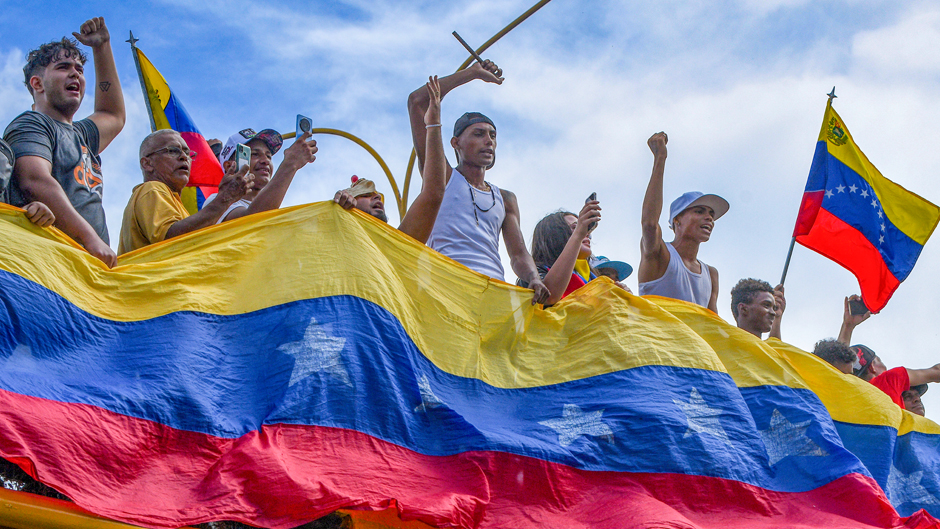
The 2025 election year in Venezuela opens up a wide space for a combination of political, security, economic, and sociocultural factors, because elections are not functioning as a simple democratic ritual but as a multi-layered event that shapes the lives of millions of people, influences regional flows, and produces new configurations of power. In this ambiance, the key question arises – whether the existing elections will mark the end of the era of Nicholas Maduro or will Venezuela enter a new phase of adapted, more sophisticated authoritarianism that maintains the old structure, but aligns it with internal and international changes. Regarding this, the 2025 elections do not offer a simple narrative because the political landscape of the country functions as a space in which the government is using controlled chaos to change the flow of expectations and manage the crisis dynamically.
The security dimension of elections takes up a central place in this analysis, given that the entire process is taking place within a specific security architecture improved by the regime for many years now. This architecture implies a combination of loyalty of the armed forces, relatively stable alliances with criminal networks, parallel institutions, party monitoring, and polyvalent relations with countries like Russia, China, and Iran. Such a structure creates an ambiance in which the government is managing the available resources by constantly balancing between repression and symbolic opening, thus producing an analytical depth of a crisis: the regime is not falling apart, but is evolving towards a form that is becoming more resilient to external pressures and internal contradictions.
In the domain of economics, the electoral process acts as an instrument of political therapy that temporarily eases the symptoms of the long-term crisis, but does not solve its structural causes. The economic havoc, collapse of institutions, dual currencies, parallel markets, and mass emigration are forming a landscape in which the citizens choose stability, even when that stability is, in fact, a form of stagnation. In such an ambiance, the securitization of everyday life becomes a norm: life transforms into a constant battle for resources, survival, and minimal normalcy, which enables the regime to maintain the system of control based on the combination of dependence, fear, and pragmatism.
The opposition in Venezuela is entering the new cycle fragmented, burdened by personal rivalries, tactical disputes, and systemic repression. Even when it provides a candidate that can mobilize mass support, the regime reacts fast with legal or administrative means to delegitimize or completely remove that candidate from the race. Moreover, the government sometimes selectively opens up a space for some opposition actors who do not pose a real threat to maintain the perception of pluralism. Regarding this, the opposition is facing a double challenge: it must maintain the unity in a hostile institutional environment, but also find strategies that avoid the traps of the controlled political space.
The international context is additionally complicating the electoral process. Russia and China maintain their relations with Venezuela not because of the political reliability of the regime, but for economic use, energy arrangements, and geopolitical signals towards the United States of America. At the same time, the United States of America is using sanctions as the key pressure instrument, even though they are often strengthening the narrative of the regime about the external enemies and thus undermining the opposition mobilization. The European Union is attempting to maintain its position of moral arbiter, but its political weight, in this context, remains limited. This is why the international actors are following the course of the elections without any illusions: rarely does anyone expect a democratic turnover, but they still seek the cracks in the system that could open up a space for gradual changes.
The internal cohesion of the regime represents a key parameter in the assessment of future scenarios. Even though the structure of power seems monolithic from the outside, the system contains within itself a branched network of factions – military, security, economic, and party – that mutually compete and cooperate. These fractions are not directly endangering the regime, but are forming the internal dynamics of power. Each of them controls a part of resources, territories, or institutions, and their interdependence is creating a system in which authoritarianism is not based solely on fear, but also on the reallocation of privileges and structural loyalty. Such a configuration of power enables the regime to adapt its authoritarian practices to the changes in the environment.
The arrival of Election Day in 2025, above all, represents a ritualized moment that is structuring the political landscape, but rarely leads to essential democratic changes. If Maduro confirms his position, a new phase of his rule opens, in which authoritarianism will adapt to a somewhat adjusted form, maybe somewhat more sophisticated and less harsh, but still based on firm control. In case the opposition reaches surprising results, the institutional mechanisms of the regime will most probably neutralize each possibility for a sudden transition, because the political system is not giving up control to the will of the voters, but bases it on its own logic of survival.
In total, the elections in Venezuela in 2025 do not seem to be the moment of the end of the Maduro era, but still carry along the shapes of the end of a phase of his authoritarianism. The new period will not mark the return of democratic standards, but will open up some space for a transformed, adapted version of authoritarian rule that fits the conditions of a deep crisis, external pressure, and internal changes. Regarding this, the upcoming election year represents the reflection of a country that is constantly changing the forms of political control to maintain the continuity of power, while Venezuela is entering the new phase of political survival in which authoritarianism is not retracting, but is mutating.
Author: Miljan Petrović