
December 2025
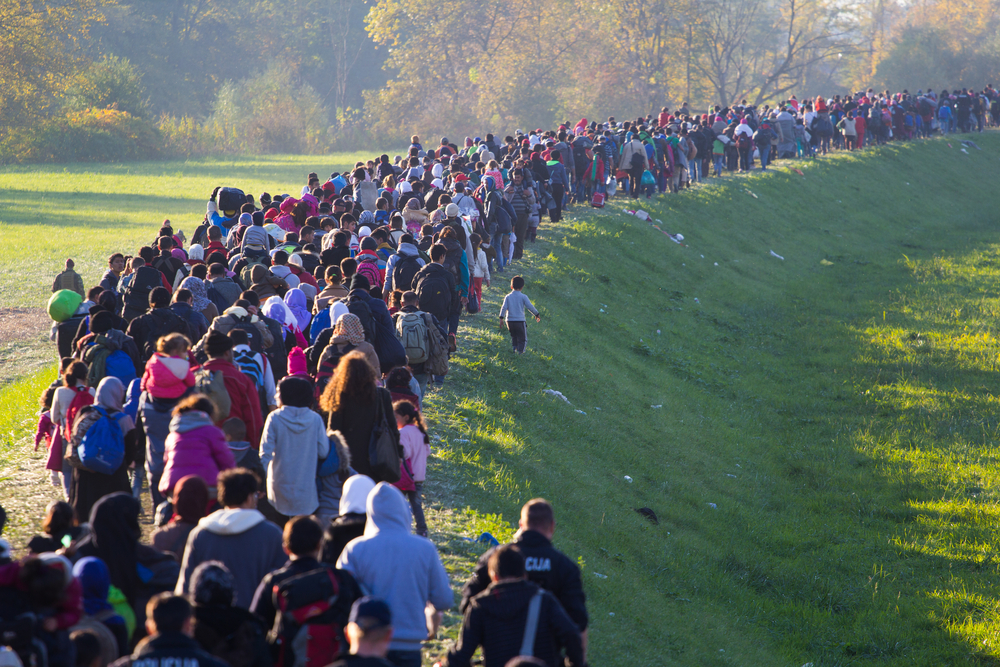
Global economic changes often lead to migrations. Countries that face economic decline and the loss of workplaces can be faced with mass exodus, while on the other side, the countries with a wider scope of employment possibilities, in which investments come and have higher chances for prosperity, are usually targeted by migrants and thus face an increased wave of migration. Regarding this, we can conclude that, with the development of globalization, contemporary migrations grow into a global occurrence that encompasses all societies, no matter their development level, impacting to a great extent their development in an economic, religious, cultural, political, and historical sense. The migration crisis poses a big problem, not only for Europe, but for the entire world as well, and the countries hit with a mass migration wave face various challenges, because migrations themselves represent a big threat not only to the security and economy, but to the citizens as well.
Faced with a mass influx of migrants, the Republic of Serbia, as a country of transit, tends to find the best way to direct the migration crisis and offer suitable help and protection to the migrants passing through it, especially to those who decide to stay in it. In the very beginning of the mass migration crisis in Europe, mostly caused by the wars in the Middle East, the migrants in the Republic of Serbia were received badly and with fear, usually due to the incidents caused by a minority of migrants in borderline areas. However, with an increased presence of the police and security services, the situation changed greatly.
While researching the issue of migrants in the Republic of Serbia, we can conclude that the awareness of understanding and assisting migrants has increased, and that there is a higher level of acceptance and integration of migrants into the society than before. Of course, it is important to stress that the majority of migrants from the Middle Eastern countries found their peace and refuge exactly in the Republic of Serbia. They were provided with all the fundamental conditions for normal life. The reception centers and asylum centers were formed, and children were allowed to continue their education. In the last few years, an increasing number of migrant children have been included in the educational system of the Republic of Serbia, and they have the same rights as their citizens.
Given the fact that the issues of population growth, the negative impact of humans on nature that causes harm to the ozone layer and accelerates climate change, as well as the issues of political instability and growing conflicts are omnipresent, in the future, a rise in migrations is expected. Moreover, the key solution for efficient management of the issue of migrations and the protection of the rights of migrants is the improvement of policies and approaches to migrations as a whole. The policies that deal with the issues of migrations must focus on changing the stigmatization of migrants, as well as the stereotypes about them, promotion of their inclusion and integration into the society, provision of social protection, education, and employment, because everyone has a right to, no matter their differences, feel respected and accepted into a society. The issue of migration will in the future demand coordination and global cooperation, and the countries that cooperate must be ready to improve their policies and their approaches to this issue. Moreover, they must share information regarding this and offer support to the country most harshly hit by the challenges of global migrations, and create a sustainable future. The Republic of Serbia is neither responsible for the migration wave nor is it the final destination for the majority of migrants. Still, as a responsible and credible international partner, it recognizes its role in this process. With its goal and dedication, the Republic of Serbia contributed to decreasing the number of illegal crossings on the external borders of the European Union by one-third since the beginning of this year. The fight against irregular migrations asks for a comprehensive response and cooperation with local and foreign institutions, and Serbia was marked as a reliable partner thanks to its dedication.
Author: Marijana Perić, student research