January 2026
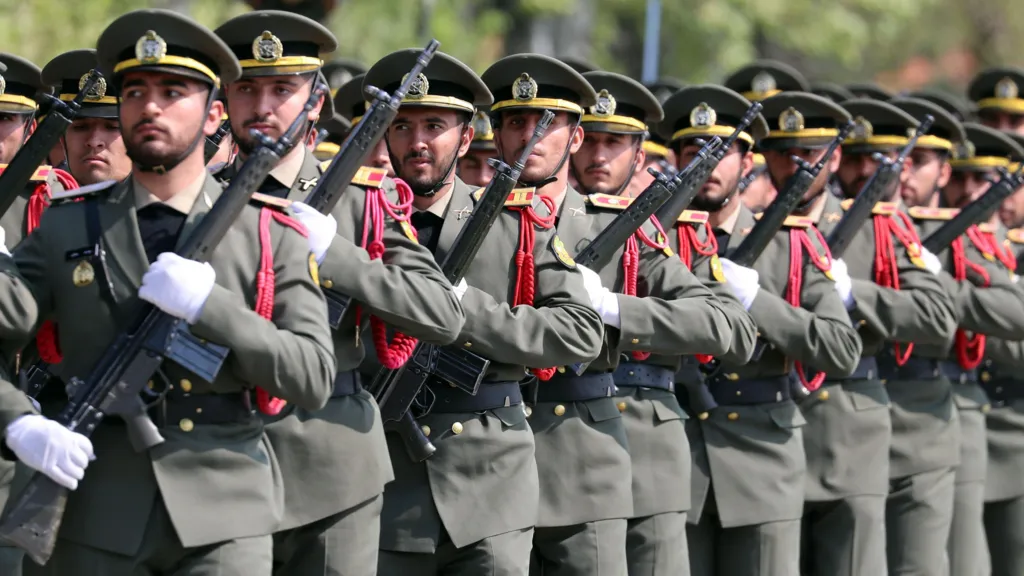
On January 29, 2026, the European Union made a political move that has been for a long time now circulating the Brussels hallways, but until now remained at the level of discursive threat and informal examinations, by deciding to list the Islamic Revolutionary Guard Corps – IRGG as a terrorist organizations and in parallel to broaden the targeted sanctions towards individuals that are deemed as directly linked with repressions against the protesters and the systemic violations of human rights in Iran. This decision is not made in a vacuum, but it is based on many years of political pressures within the Union itself, where the security arguments, normative expectations, and the need for preservation of the foreign policy credibility have gradually merged into a relatively coherent line of action.
With this move, the EU is sending a multi-layered message that surpasses the mere reaction to the current protest wave in Iran and enters the zone of long-term positioning of the Union as an actor that tends to translate the normative discourse into operational politics. The classification of IRGC as a terrorist organization, above all, is a political signal, but that signal also has quite concrete implications on financial flows, the legal status of the connected entities, and the ability of international action of individuals located at the top of the Iranian security hierarchy. The EU is not attempting with this to cause a direct change in Tehran’s behavior, but to redefine the framework within which future interactions will take place, clearly stressing that violence against the civilian population is no longer treated as an internal issue of a sovereign state, but as a factor that directly impacts the European security architecture.
At the same time, the Union is maintaining the characteristic ambivalence that marks its foreign and security policies, because it is combining sanctions with avoiding any kind of military or direct confrontational approach. The EU still relies on the legal and financial instruments, the diplomatic pressure and coordination with partner states, above all the United States of America, but it also tends to maintain the minimum communication channels with Tehran. This strategy reflects the consciousness of European decision makers that complete isolation of Iran would not produce stability, but would most probably generate an additional level of unpredictability in the region that is already functioning at the edge of controlled chaos.
Regarding this, the EU is not building its policy towards Iran solely on the issue of human rights, but it is deeply rooting it into a wider security context, which includes the nuclear program, regional conflicts in the Middle East, and energy flows that would, even though indirectly, impact the European markets. Brussels understands well that each decision to harden the sanctions is also producing countereffects, not only in terms of their relations with Iran, but within the Union itself as well, where Member States do not always nourish identical perceptions of risks and priorities. This is exactly why the European policy towards Iran often seems like a carefully calibrated balancing game, in which the Union is attempting to demonstrate determination without taking any obligations it cannot fulfil.
In an analytical sense, this decision illuminates a deeper problem of European foreign policy, which is reflected in the gap between normative ambitions and limited instruments of power. The EU wants to act as a global actor that shapes the behavior of others through rules, sanctions, and institutional pressure, but at the same time, it avoids scenarios that would require a high degree of political cohesion and willingness to take risks. The policy towards Iran thus becomes an illustrative example of the wider trend of securitization of everyday life, in which issues of human rights, protests, and internal repression are increasingly refracted through the prism of security, migration, and neighborhood stability.
In the coming period, the EU will almost certainly try to further internationalize this approach, insisting on the harmonization of sanctions regimes with transatlantic partners and seeking legitimacy through multilateral forums. In parallel with the above, the Union will probably invest in mechanisms that formally have a humanitarian and media character, such as support for independent journalists, digital platforms, and civil society organizations, although their actual reach will remain limited by Iran’s tightly controlled internal environment. Such an approach serves more to preserve the normative coherence of the EU than it actually changes the relations of forces on the ground.
Iran, for its part, will not remain a passive observer, but will almost certainly respond with a combination of harsh rhetoric, selective suspension of cooperation, and an attempt to portray European measures as part of a broader strategy of Western pressure on a sovereign state. Tehran will continue to use regional levers of influence and the energy dimension as instruments of deterrence, counting on internal differences within the EU and the fatigue of European societies from prolonged foreign policy crises. It is precisely in this dynamic that the analytical depth of the crisis lies, because it does not arise from one move or one decision, but from the collision of long-term strategic constraints and short-term political imperatives.
In the end, the EU’s security policy towards Iran in 2026 does not represent a turning point in the classical sense, but a consolidation of the trend in which the Union reacts more often through sanctions and symbolic moves, aware of their limitations, but also of the inability to offer a sustainable alternative. This approach may produce a temporary sense of political consistency, but at the same time, it leaves open the question of whether the EU is really influencing Iran’s behavior or is merely managing its own perception of responsibility in a world that is becoming less amenable to normative shaping.
Author: Miljan Petrović