
February 2026
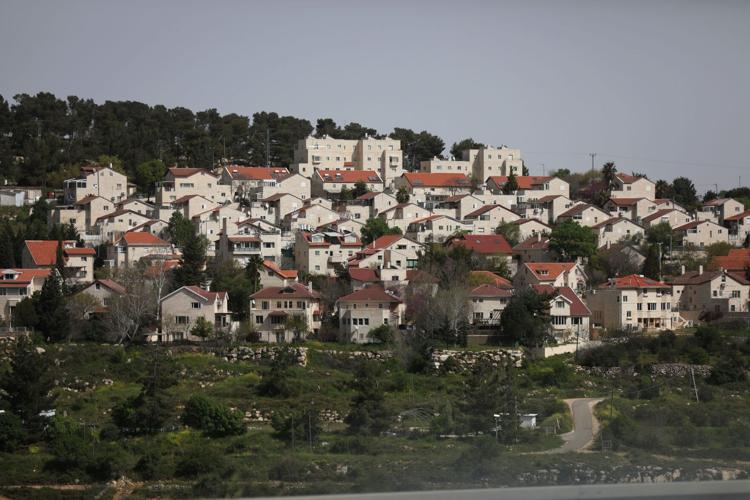
The United States has announced the first diplomatic event to allow the provision of consular services within a Jewish settlement in the occupied West Bank, departing from a long-standing policy of treating the settlements as a major obstacle to the peace process. The planned provision of routine passport services to US citizens in the settlement of Efrat, south of Jerusalem, represents an administrative formalization of the institutional presence of the US within the disputed territories. Such a move functions as a regulatory signal that implicitly changes the settlement’s legal and political status. It raises several questions, because the physical presence of American officials introduces a precedent in the interpretation of territorial sovereignty and can act as a vector for the spread of the “virus of instability” through the already compromised diplomatic mechanisms of the region.
Over the past decades, US policy has viewed Israeli settlements as an obstacle to peace, while the wider international community has treated the West Bank as the basis for future Palestinian statehood. The administration of President Donald Trump has demonstrated that the political DNA of American foreign policy can be modified relatively quickly, while selectively abandoning earlier normative patterns. Secretary of State Mike Pompeo’s earlier statements that the settlements were not necessarily in violation of international law represented a pharmacological “introduction to therapy” that has now been institutionalized. In other words, it is about the gradual redefinition of legal standards through practice, and not through formal international agreements.
Additional consular events have also been announced in the Palestinian city of Ramallah, as well as in the settlement of Beitar Ilit and the Israeli cities of Haifa, Netanya, and Beit Shemesh. This network of activities establishes a system of repeated institutional exposure, where legitimacy is not introduced suddenly, but through a series of low-intensity administrative interventions. From the perspective of political pharmacodynamics, such an approach allows the organism of the international system to gradually adapt to the new norm, without an acute reaction of rejection. Israel’s Ministry of Foreign Affairs labeled the decision as historic, using the phrase “Judea and Samaria”, thus further reinforcing the discourse towards the normalization of annexationist narratives.
The Palestinian side reacted harshly, stating that such an approach normalizes annexation and treats the disputed territory as an integral part of Israel. From the point of view of political epidemiology, a continuous change in the attitude of a great power can reduce the “social immunity” of a region, that is, the ability of local actors to preserve a stable institutional homeostasis under external pressure.
The situation is further complicated by the statements of the US Ambassador to Israel, Mike Huckabee, who suggested that Israeli territorial expansion could be acceptable up to the Euphrates River. Such formulations have been assessed by the international community as dangerous and legally problematic. The Palestinian Ministry of Foreign Affairs stated that this contradicts the interpretation of legal and historical facts, as well as the fact that the statements deviate from Washington’s formal position. In other words, the US diplomatic signal becomes heterogeneous, with elements acting incoherently with each other, which weakens the predictability of the system and increases the likelihood of misjudging risk.
From a strategic point of view, the American move can be seen as a controlled experiment in changing norms. The institutional presence within the settlement acts as a catalyst that accelerates the mutations of the region’s political DNA, while formally maintaining the rhetoric of respect for international law. Such a dual structure creates a situation where legal mechanisms treat the symptoms but not the cause of instability.
From an analytical point of view, the key parameters to monitor are: the change in the perception of the status of settlements in American institutions, the reactions of regional and international actors, and the internal political dynamics of Israel. The interaction of these three factors can act as a political antigen that activates chain reactions, with the potential to destabilize existing security arrangements.
In the following period, a gradual increase in institutional fragmentation is expected. The normalization of consular presence can become a model for further initiatives of a similar type, thereby exerting continuous pressure on the international legal order. This raises several questions regarding the sustainability of the peace process, but also with possible indirect consequences for the US’s European allies through migration and security channels. In a scenario without a coordinated response by international actors, there may be the formation of localized foci of instability, where the policy of settlement expansion acts as a long-term stressor that changes the political DNA of the territory. Conversely, multilateral legal and diplomatic pressures could act as a “vaccine” that maintains a minimum level of societal immunity and prevents escalation.
In conclusion, the US move in Efrat is not an isolated administrative event, but an indicator of a bigger change in the international approach to this issue. Therefore, any further institutional consolidation of such initiatives must be viewed through the prism of cumulative risk and the possibility of spreading the “virus of instability” beyond the local context, with consequences that go beyond the borders of the West Bank itself and affect the wider geopolitical ecosystem.
Author: Miloš Grozdanović