
February 2025
A decade after the great migration crisis of 2015, Europe is once again faced with waves of instability, which make migrations not only a humanitarian, but also a security and especially a political issue of first order. Even though essentially just a consequence of conflicts, climate changes and economic inequality, it is indicative that, until 2025, migrations transformed into the instrument of influence, pressure and negotiations between states, but the inter-political competition as well, whereas in the end of 2024, it was determined that the migration wave that hit the Old continent is not as large as the one from 2015, but is still one of the largest in the last years.
Especially Turkey, as one of the main bastions o migrant flows and a potential “critical juncture” that can overflow Europe with new waves of migrants, as well as other countries that rank high as potential catalyzers of migrant flows – especially the ones currently indirectly hit by regional conflicts or geographically close to them, use the migrant flows as an instrument of diplomatic blackmail. On the other hand, within the European Union, there is a trend that some governments generate anti-migration rhetoric to strengthen political support. In the Balkans, the corridor connecting the Middle East and Western Europe is once again gaining significance – but this time as the grounds for testing relations between security and humanity.
The end of 2024 and the beginning of 2025 are still marked by an inflow of a certain number of migrants passing through Serbia, Bosnia and Herzegovina, and Montenegro, though it is indicative that, at the time being, there are no indications that the route will return to the scope it had in 2015. Still, it is visible that this route, in time, took up some new characteristics, thus evolving from a simple channel for transit of people into a very clear geopolitical division line.
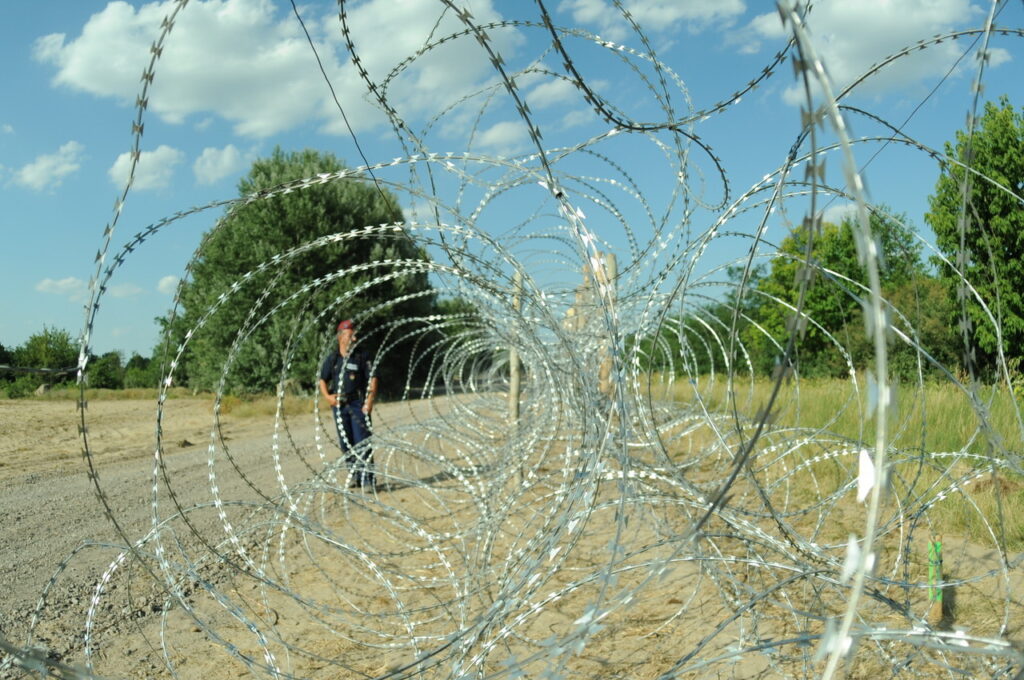
Namely, Serbia has recently been gravitating in the center of European negotiations on the control of external borders, balancing between the pressure of Brussels to adapt the visa policy to the EU and the influence of Turkey, which is still maintaining a significant level of coordination in the migration flow management process. At the same time, countries such as Hungary and Austria are continually tightening their monitoring measures, building new fences, and criticizing the “soft” approach of the countries of the region. In such a constellation of chances, the Balkan region is becoming a sort of buffer zone – a territory where the interests of the European Union, Turkey, and local governments meet, and which sees not only a security threat in migrations, but also a chance for political repositioning.
During the last few years, it has been noticeable that, within European societies, migrations have once again become the topic that shapes election results. Namely, countries such as France, Germany, and the Netherlands are witnessing the growth of right-wing oriented populist parties, which use the issue of migration as a symbol of a wider fight against the “elites” and “globalism”. At the same time, centrist governments tend to create a new balance – a firmer control of the borders, while maintaining the humanitarian standards.
Exactly in this context, migrations stop being a simple question of demographics or the job market, evolving into the question of political identity. Namely, each new migrant wave coming from Syria, Afghanistan, or the Sahel countries represents a catalyzer of new deep internal cleavages within European societies. This reflects their instrumental value – the ability to incite fear, mobilize voters, and change the political balance.
In fact, migrations have become a part of the wider security architecture of Europe. It is becoming quite an increasingly common occurrence that countries perceive migrants through the prism of risk, from terrorism and radicalization to hybrid threats and abuse and dissemination of disinformation within cyber operations. Even though the real security risks are statistically limited, the perception of danger has become a political tool.
At the same time, the concept of “hybrid migration”, based on the idea that countries can direct migrant flows to cause political consequences in other regions or specific states, is increasingly shaping European strategies. Belarus already used this tactic in 2021, as well as Turkey during the crisis at the border with Greece in 2020, and some countries of Western Africa use nowadays potential new migrant flows as leverage in their relations with the EU. In this context, a migrant ceases to be just a victim of war or poverty and becomes an unaware participant or even a pawn in geopolitical games.
The Western Balkan countries, thus, tend to balance between the European demands and their own capacities. Serbia, North Macedonia, and Bosnia and Herzegovina still cooperate with Frontex, but maintain a high level of control over reception centers and the migrant registration procedure. However, insufficient resources, slow bureaucracy, and a lack of regional coordination significantly burden the efficient response. Moreover, the growing anti-migrant rhetoric in some parts of the region is becoming an instrument for strengthening the nationalist narratives. Instead of being treated as a structural problem of the contemporary world, migrations are being reduced to an internal threat and are being used as a replacement for economic and social problems.
Today, ten years after the grand migration crisis, it is clear that migrations are not only an extraordinary occurrence but a constant component of global politics. Their instrumentalization – whether as a means of influence, political mobilization, or security pressure – is the new normalcy.
For Europe, the key challenge is not rooted only in the methodology of border management, but also in the preservation of values on which Europe is founded, i. e., human rights, solidarity, and openness to the Otherness. Without these, the fight against the instrumentalization of migrations could easily transform into the fight against the mere essence of the European project.
Author: Tanja Kazić