
May 2025
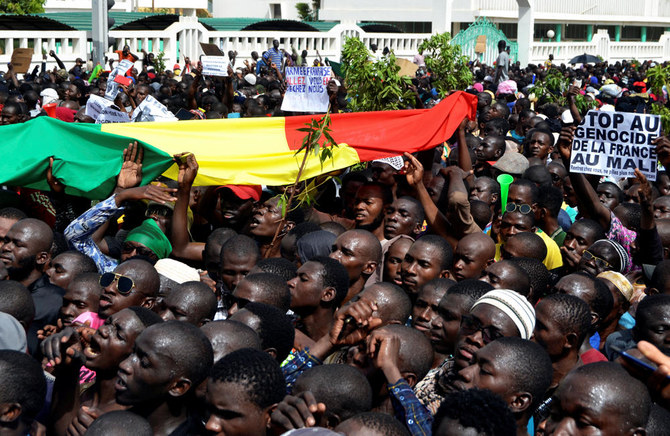
Five years after the coup (that took place in 2020), Mali is once again caught up in the whirlwind of political tensions. A wave of protests spreading throughout the Capital Bamako, and other major cities in 2025, represents a new phase in a long process of social and political erosion, which started long before the military intervention, in which the coupist group overthrew President Ibrahim Boubacar Keita. While the current military junta, led by General Assimi Goïta, insists on “national unity” and the “defense of sovereignty”, the population and civic organizations point to the fact that there is a strong institutional paralysis and systemic failure of reforms, which the military government tends to present as a success.
This new wave of dissatisfaction is not an isolated case but, in fact, a clear symptom of a deeper crisis of political legitimacy and trust in the country. Speaking in the context of a wider regional environment flooded by the rules of military juntas (for example, in Burkina Faso and in Niger), as well as the weakening and gradual decline of the Economic Community of Western Africa States – ECOWAS, it is indicative that the Mali crisis is seriously testing the limitations of African democracy and the respect of the principle of sovereignty in the post-colonial era.
Still, the said is not an absolute deviation from the historical trajectory of this country. Namely, since gaining independence in 1960, Mali has continuously been oscillating between authoritarianism and short-term phases of experimenting with democracy. Exactly this institutional weakness, clientelism, and corruption enabled the survival of coups as a modality of government change, from which the region, historically speaking, is not deviating, and thus neither is Mali.
The coup that took place in Mali in 2020 was initially greeted with some sympathy, especially among the youth and the urban middle class. However, what followed after the establishment of the rule of the military junta – the second coup, or a counter-coup, initiated the cessation of relations with France, gradual departure of members of the French Armed Forces from the Barkhane Operation zone of engagement, as well as the arrival of the members of the then Russian private military company Wagner, and nowadays the “African Corps”, which all represent small, but significant obstacles in the geopolitical positioning plan of Mali. While expecting the “sovereign transition”, the local population faced a completely different scenario: political isolation, economic sanctions, and weakening of the institutional capacities of the state. Nowadays, the central government is controlling, in fact, less than half of its territory, given that in the northern and southern parts of the country, there is a registered high presence of groups linked to Al-Qaeda in Islamic Maghreb (AQIM) and the Islamic State in the Greater Sahara (ISGS).
During the last few months, we have registered an increase in the number of spontaneous and organized protests in Mali, in which the local population, young activists, students, trade unions, and representatives of some Islamist groups are expressing their dissatisfaction with the rule of the military junta. Led by the idea that the “homeland is not the barrack”, and alluding to the fact that a country cannot be led by military personnel, but civilian actors, the protesters are continuously demanding adoption of a clearly defined temporal framework for the return to civilian government, transparency in projecting security sector budget, protection of media and civic freedoms, as well as the cessation of cooperation with the “African Corps”. The responses of the military junta represent a combination of repressive measures and selective dialogue. Namely, when speaking of the return of the civilian government, the statement of the military junta that gives support to General Goïta to continue to rule the country until 2030 clearly shows that such a framework will not be defined soon. Moreover, the blocking of the work of political parties, as well as Internet blocking, arrests of journalists and some political leaders, all point to the fact that the military junta does not have any intentions to “listen” to the will of the people inhabiting the territory they rule. In the end, the anti-Russian narrative is not necessarily anti-Russian, but represents the will of the people to take their destiny into their own hands, drawing lessons from the historical fact that the “help” of the West, and in this case, France, has never brought any good, neither to the state nor to the people.
The issue of renewal of institutions in Mali, finally, is the most complex challenge. Namely, the long-term stability cannot be built on military power, but on the return of the legitimacy of the state in the eyes of its citizens, which points to the fact that it is necessary to initiate an inclusive political dialogue, security sector reforms, as well as economic and social integration of the youth. The latter probably represents the essence of the solution to this problem: the youth is the main initiator and catalyzer of protests in the country, and they also have the biggest interest to make their country their homeland, in which they will want to live, work, create, and for which they will be willing to fight, not only foreign-policy-wise – if such necessity ever arises, but also in terms of internal policies.
Author: Tanja Kazić