
May 2025
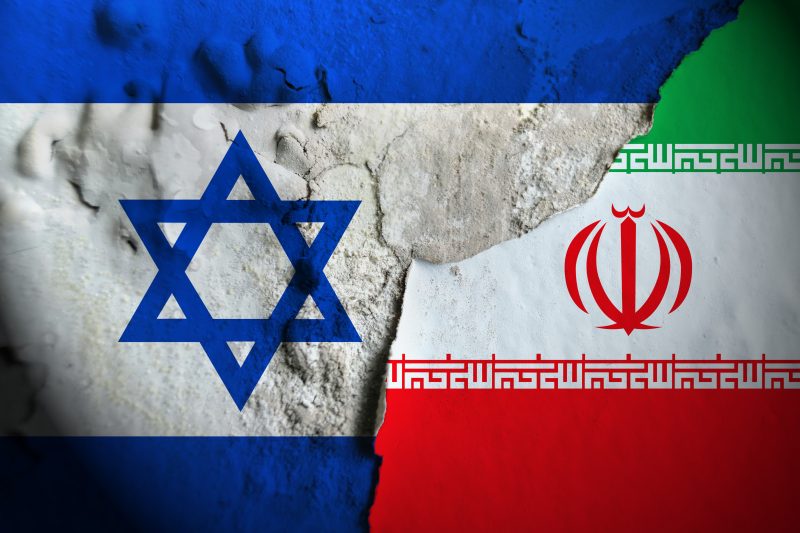
At the beginning of 2025, the Persian Gulf has once again become the epicenter of global security tension. The conflict escalation between Iran and Israel, after a series of covert operations, cyber-attacks, and incidents in the Strait of Hormuz in the last year, has led to a sudden deterioration of regional stability. While some Western analysts expected a gradual return of diplomacy after the war in Gaza and the changes in Washington, the reality on the field shows that the balance of power in the Gulf is increasingly unstable, and that the trust between Tehran and the West is at a historical minimum.
Iran, encouraged by the level of self-sufficiency reached and the deepened cooperation with Russia and China, is showing less and less readiness to compromise in nuclear negotiations. At the same time, Israel, faced with the post-war insecurity and internal political turmoil, is increasingly aspiring to project deterrence through asymmetric and preventive measures. And so, the Persian Gulf becomes the zone in which local pretensions, global strategies, and high insecurity intertwine.
Even since the collapse of the Joint Comprehensive Plan of Action (JCPOA), the political space for the renewal of negotiations remains extremely limited. During 2024, Tehran continued to enrich uranium to a level close to weaponization, while at the same time it limited inspections of the International Atomic Energy Agency (IAEA). The informal diplomatic channels via Oman and Qatar did not bring any advancements, and the new administration in Washington decided to condition each initiative on the removal of sanctions and the cancellation of Iranian drone deliveries to Russia.
Such dynamics result in a frozen conflict, in which neither side can fulfill its goals. Iran is economically drained with sanctions, but it remains ideologically unshaken, while the United States and the EU do not possess a consistent strategy for the return to negotiations. Israel, on its side, is increasingly acting as an independent actor, which hinders diplomatic attempts and increases the risk of uncontrolled military conflict.
The Israeli security doctrine in 2025 is based on three key pillars: preventive action, technological superiority, and regional cooperation with the allies in the Gulf. The relations with the United Arab Emirates and Bahrain, even though formally stable, are increasingly dependent on the internal perception of risk generated by the Iranian influence. The fear of the spread of the Hezbollah model in the southern part of Iraq or Yemen led the Israeli military intelligence community to increasingly often act outside the classical operational zones.
However, Israel now finds itself in a situation in which its deterrence strategy can lead to an opposite effect. Each attack against the Iranian objects or command structures causes a series of asymmetric responses – from cyber operations to attacks by the proxy forces. The last wave of attacks with UAVs against Israeli territory at the end of 2024 showed that Iranian responses are no longer limited to rhetoric. This new risk level narrows the space for negotiations and leaves international actor increasingly fewer possibilities for de-escalation.
While Oman traditionally served as a discrete diplomatic channel between Tehran and the West, in the last two years, the role of an intermediary is increasingly often being taken up by Qatar, using its relations with Washington, but also its growing influence in the Islamic world. After normalizing its relations with Iran in 2023, Saudi Arabia took up a cautious stance – it supports stability, but does not want to be found in the middle of a regional conflict.
The security system in the Gulf thus remains fragmented and based on short-term interests. Contrary to the Cold War model of the bloc conflict, nowadays, we are speaking of a complex network of actors who are at the same time both cooperating and competing, shifting sides in accordance with the current economic and energy interests.
The Persian Gulf in 2025 is entering the period of “strategic fog” – a situation in which neither side can reach a clear advantage, nor accept compromise. The security architecture of the region remains vulnerable because it lacks a credible mechanism of collective security. The nuclear program of Iran is increasingly becoming an instrument of geopolitical negotiations, and not only deterrence, while Israel’s politics of isolation and asymmetric response is deepening the cycle of distrust.
If we do not reach a new format of negotiations, which would include not only the US and EU, but also China and Russia as the key guarantor powers, the future of the Gulf will be marked by periodic crises and incident risk that could escalate into a wider conflict. In the era when energy has once again become the instrument of power, and information has become a weapon, the Persian Gulf remains the symbol of a deep cleavage between the diplomacy of the 20th century and the realpolitik of the 21st century.
Authors: dr Violeta Rašković Talović, Tanja Kazić