
May 2025
By mid-2025, it will have become clear that the Pacific is transforming into the central point of the international system. The countries of the region are no longer only participating in the standard geopolitical competition; they are defining patterns that influence the global order. In other words, the issues that once belonged to regional security nowadays define the architecture of international relations. This opens up a series of questions about the sustainability of the existing balance.
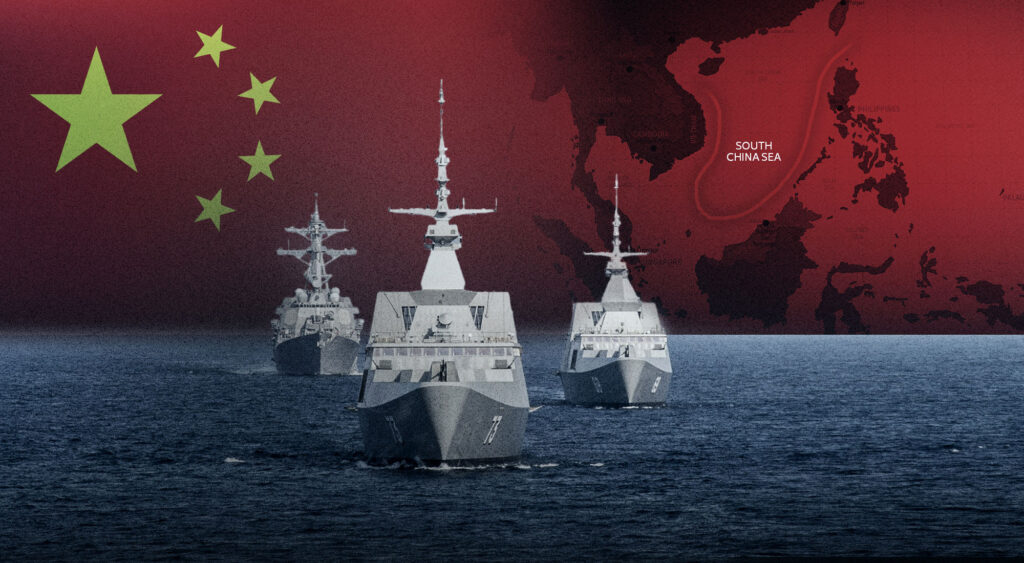
China is strengthening its activities in the South China Sea through the construction of infrastructure, broadening military capacities, and establishing economic dependencies. At the same time, the United States is revitalizing its partnership network through AUKUS, QUAD, and strengthening bilateral relations with Japan, South Korea, and the Philippines, even though such a policy is questionable since the appointment of the new US President, Donald Trump. In other words, the Pacific is no longer situated in the periphery of global politics; it functions as its functional center. This opens up a series of questions about the long-term stability of regional institutions and the political DNA of actors that participate in this competition.
During the previous decade, China combined military modernization with economic expansion. The “Belt and Road” Initiative includes the key naval points and creates economic patterns of dependence, while the development of the navy and cyber capacities enables Beijing to act outside its traditional geographical limitations. This approach forms a specific “strategic economy of power”, in which infrastructure and loans function as instruments of pressure. This opens up a series of questions about the level of social immunity of Pacific countries to foreign influence.
The West responds with the consolidation of security formats. AUKUS is introducing a technologically more advanced structure of regional cooperation, while QUAD is shifting from symbolism into operational coordination – from joint drills to exchange of intelligence on cybersecurity. In parallel, the United States of America is broadening its military presence in Japan and South Korea and is renewing its presence in the Philippines. In other words, the West is attempting to prevent Chinese advancement in the first island chain. This opens up a series of questions about the sustainability of pressuring Beijing.
By May 2025, three points remain the hotspots of instability. Taiwan is followed by a continuous “virus of instability”, since Chinese military and cyber activities are on the rise, while the US is increasingly strongly supporting the defense capacities of Taipei. In the South China Sea, incidents between Chinese and Filipino vessels continue to occur. The Pacific microstates serve as spaces for competition through donations, security arrangements, and symbolic recognitions. In other words, there is a war being waged for perception, and not territory. This opens up a series of questions about the resilience of the region to foreign interventions.
The balance of power in the Pacific is gaining the shape of a network system of alliances, dependencies, and limited interdependences. China is strengthening its economic presence and infrastructural connectedness, while the US and its partners are maintaining their advances through military logistics, information flow, and advanced technologies. This opens up a series of questions about the long-term stability of this structure and about what level of social immunity this region can construct.
The long-term outcome depends on three factors: the ability of China to preserve its growth despite pressures, the ability of the West to preserve unity of its alliances, and the flexibility of countries such as India, Indonesia, and Vietnam, which refuse to function as a unipolar instrument. In other words, the Pacific is entering the phase of unstable balance, in which neither side can easily achieve permanent advantage without the risk of escalation.
This balance represents a temporal mechanism of preservation of peace, but remains sensitive to disorders. Each change in the status quo can produce a chain of reactions with global consequences, from energy markets to technological security. This opens up a series of questions regarding how the international order of the twenty-first century will look – as a coordinated structure under pressure, or as a form of a sophisticated Cold War.
Author: Miloš Grozdanović