May 2025
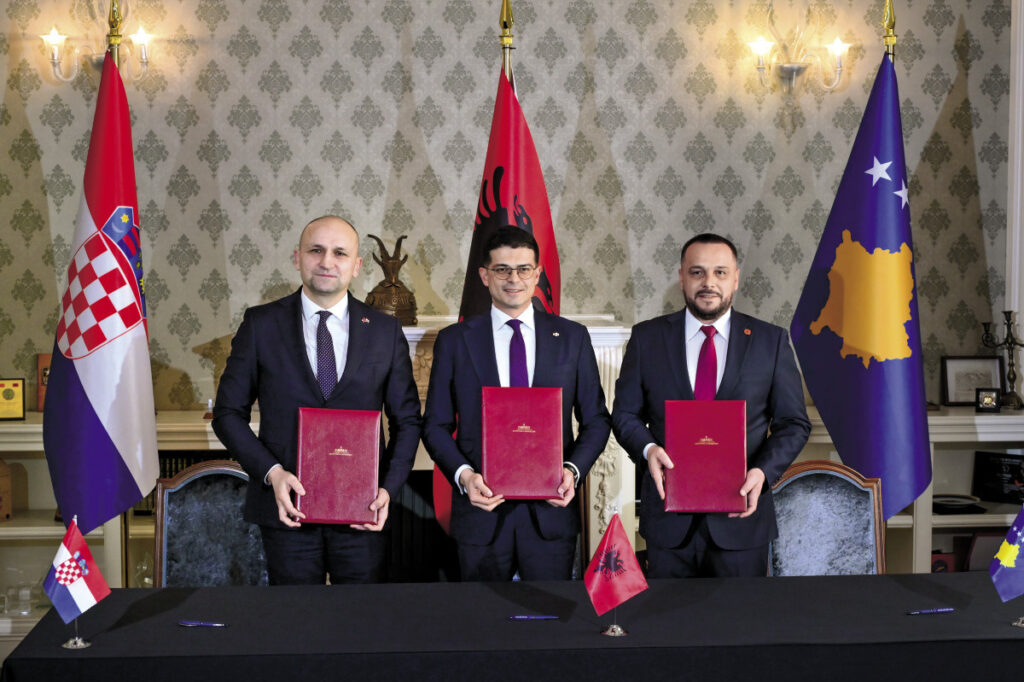
The signing of the defense accord between Albania, Croatia, and the so-called “Kosovo” in April 2025 represents a development that is changing the fundamental security architecture of the region. The accord was formally presented as a mechanism for strengthening stability, but the political DNA of this initiative identifies ambitions that surpass the declarative framework. In other words, the signatories are forming a structure that is surpassing the threshold of classical trilateral cooperation, with the possibility of Bulgaria and North Macedonia joining. This opens up a series of questions about its long-term impact on the Western Balkans and the true intentions behind signing this defense accord.
The formation of this bloc points to the consolidation of the Western-oriented actors that are acting in line with the NATO principles, but without formal anchorage in its hierarchy, given the fact that the so-called “Kosovo” is not a NATO member. Such an approach is changing the regional balance and creating the sense that a new center of coordinated security politics is emerging. In other words, the region is entering into a configuration in which cooperation is gaining the character of a network structure. This is opening up a series of questions about the position of other actors that must adjust their security models.
This accord is the result of many years of consultations between Tirana, Zagreb, and Pristina, with continued diplomatic support of Washington. The environment in which it emerged shaped the spread of the “virus of instability” after the war in Ukraine and the growing fear of escalation of crises in Bosnia and Herzegovina and the northern part of “Kosovo”. In other words, pressure was created for the region to strengthen its own social immunity. This opens up a series of questions about whether this structure is based on the real need or, in fact, on geopolitical strategy.
The incidents along the administrative line between Serbia and the so-called “Kosovo” during 2024, as well as the presence of Russian security counselors in the Republic of Srpska, have all contributed to the dynamics in which the Western partners are encouraging the development of flexible defense arrangements. In this context, the “mini-NATO” concept in the region is becoming a politically functional model. This opens a series of questions regarding how the rest of the countries are perceiving such an approach to security.
Albania and Croatia, as NATO Member States, and Pristina, with specific relations with Western structures and aspirations towards NATO membership, are forming a framework for operational integration without formal Alliance expansion. In other words, the signatories are creating a mechanism that enables alignment of procedures and training without institutional changes. Albania and the so-called “Kosovo” are negotiating the formation of a joint unit that would engage in peace operations, which is opening up a series of questions about the resilience of this model in future crises.
The goals of this bloc encompass collective reaction to crises, joint military drills, cyber cooperation, and political consolidation of pro-Western structures. Therefore, we are rightfully asking whether this framework could become a supranational model of consolidation, or will remain an instrument of limited application.
The Accord also has a heightened symbolic dimension, especially in terms of the status of the so-called “Kosovo”. Signing into a triad, with two NATO Member States, treats Pristina as an equal actor and thus elevates its international profile. In other words, this mechanism is strengthening the position of the so-called “Kosovo” within the Western security framework, despite the unresolved status issues. Exactly this is what is opening a series of questions about the future dialogue between Belgrade and Pristina and its impact on the existing negotiation frameworks. At the same time, the fact remains that the international status of the so-called “Kosovo” indeed is not recognized within the United Nations and that the majority of key normative documents, including Resolution 1244, maintain Serbia as the holder of sovereignty, and KFOR as the only armed formation responsible for maintaining the security of all citizens. Given that the SC UN Resolution 1244 defines KFOR as the only armed formation in the territory of “Kosovo”, the trilateral defense agreement is conflicted to the Resolution. In other words, the symbolic effect of this accord does not change the legal framework that defines the position of Belgrade, nor has it weakened its right to insist on institutional continuity. This opens up a series of questions about the real power of such moves in comparison to the international legal obligations that remain in force.
Reactions to the accord confirm its geopolitical strength. Belgrade sees it as a form of new bloc positioning that impacts regional stability. Russian statements stress the perception of unprecedented risk that could change the balance of power. The Western capitals, however, present it as an example of regional strengthening of resilience, no matter the fact that such actions do not respect the SC UN Resolution 1244. In other words, different actors interpret the same process through their own security narrative. This opens up a series of questions regarding how these differences will affect the political trust in the region.
In the functional sense, the trilateral accord changes the relations of power: Albania is gaining additional credibility, Croatia is strengthening its position as an intermediary, while Pristina is, for the first time, establishing a more stable framework of collective protection. At the same time, there is a risk of deepening the existing asymmetries. In other words, the accord can become a factor of polarization. This opens up a series of questions about the future role of regional mechanisms of cooperation.
If the activities of this bloc are limited to logistics, humanitarian operations, and cybersecurity, this model could have been more acceptable and potentially broadened to other actors as well. However, if perceived as an instrument directed against the Republic of Serbia, the formation of informal counter-blocs can occur, as well as the strengthening of foreign policy support of Belgrade. Therefore, perception defines reaction. This opens up a series of questions about the stability of the wider security system.
The accord between Tirana, Zagreb, and Pristina represents the most concrete attempt at redefining the security structures of the Western Balkans in the last two decades. It points to a trend of forming micro-alliances with the function of additional layers of social immunity in the environment exposed to foreign influence. In other words, its real significance depends on the fact whether it will contribute to stability or will, in fact, become a catalyzer of new cleavages. This opens up a series of questions regarding how the region will manage its political DNA in the following period.
Author: Miloš Grozdanović