
June 2025
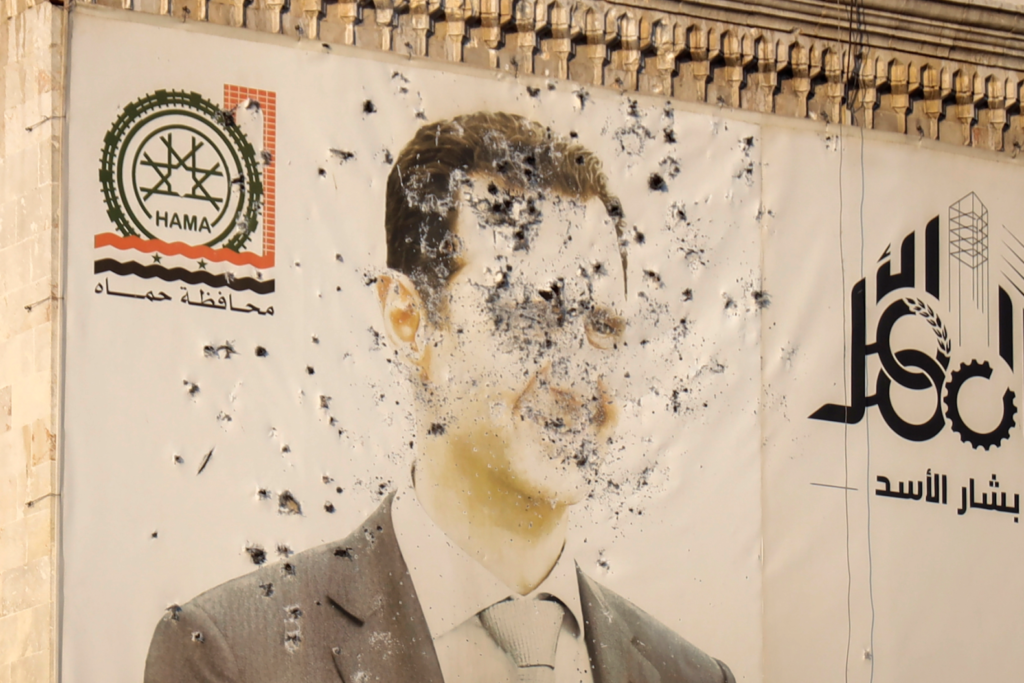
Six months after the fall of the Bashar al-Assad regime, Syria is in the most delicate phase of its contemporary history. The overthrown authoritarian system is not replaced by a functional state order, but with a series of regional authorities, paramilitary structures, and temporary councils that control different parts of the territory. The Syrian state is no longer a unique political subject, but a space of fragmented interests, in which regional and global ambitions intertwine.
The fall of Damascus in December 2024 was not a moment of freedom, but the beginning of a new phase of the fight for power. While in the past the main actors of the conflict were the regime and the opposition, nowadays the conflict is waged between allies who once supported the same side. Russia, Iran, and Turkey are attempting to redefine their roles in the post-Assad Syria, while the United States of America and the European Union are attempting to prevent a complete collapse of the state and a new wave of radicalization.
The collapse of the centralized government has created a geopolitical vacuum filled by regional actors fast. In Northern provinces, Turkey is supporting the Sunni authorities, combining military presence with economic impact. In the east, the Kurdish forces – now under the leadership of the Syrian Democratic Council – are attempting to consolidate autonomy within the new federal framework, which is, for now, strictly declarative.
In the south, where the interests of Jordan and Gulf monarchies intertwine, there is an attempt at creating a zone of stability that could become the model of the future Syrian federalization. However, in practice, the demarcation lines remain fluid, and armed incidents among local militias, above all the Shia and Sunni militias, are increasingly frequent.
Moscow and Tehran, who acted as the key foreign pillars of the al-Assad’s regime for decades, are no longer in a state of harsh insecurity. Russia is attempting to maintain its bases in Tartus and Khmeimim, striving towards the new government granting it the status of the “guarantor of stability”. Still, its influence significantly declined due to financial hardship, limited resources, and the growing role of Turkey. On the other side, Iran entered into an open race for domination in central and eastern provinces, even though Turkey is still maintaining primacy there.
In the last six months, Turkey has conducted the most consistent strategy: it shifted from enjoying military presence to exhibiting economic and administrative influence. Turkish companies are managing the local infrastructure in Azaz, Jarabulus, and Idlib, while Ankara supported in Damascus the formation of the Syrian National Council, which consisted of moderate Sunni leaders. This move caused reservations in Iran and cautious support of the Gulf states.
Saudi Arabia and the United Arab Emirates perceive Syria as a space for the new beginning of their regional diplomacy. After years of distancing, they are attempting to establish influence through financial support to the reconstruction and political pressure on the formation of the government that would marginalize Islamist groups. Still, these initiatives remain limited due to disagreements among the Arab states regarding the status of Iran and relations with Israel.
For the United States and the European Union, the fall of al-Assad did not mark victory, but a new source of worries. Washington is focused on the prevention of the return of terrorist cells, while Brussels is attempting to avoid a new migrant wave. The issue of renewal of state institutions remains disputable: without a unique partner in Damascus, the Western countries have no one to offer assistance to.
Holding the Donor conference for Syria, organized by the EU in March 2025, under the motto of offering support to Syria, was based on the concept of “local realism” – gradual support to local self-governments that fulfill minimal standards of transparency and security. However, this approach risks cementing the fragmentation of the country, because the local actors are becoming increasingly independent in comparison to central institutions that are yet to be reinstated.
With the weakening of the central government, a new security challenge as well – the return of foreign fighters from Iraq and other regions to Syria, but also their consequent return to their countries of origin as well. Their loyalty is fluid: some act within tribal militias, others as mercenaries in the service of foreign forces, and some of them, the most loyal ones to the current president, Ahmad al-Shaara, who previously led the terrorist organization Hayat Tahrir as-Sham, transformed from being foreign terrorist fighters – FTF into regular members of the Syrian Armed Forces. This phenomenon is transforming Syria into a hotspot of “decentralized extremism” that is not under the control of any center of power.
For regional countries, especially Jordan and Lebanon, this has been the biggest security risk since 2014. The return of terror in a local form – not just as global jihadism, but also as a symbiosis of crime and politics – shifts the nature of instability in the region.
Six months after the fall of Bashar al-Assad, Syria is no closer to peace than it was before al-Assad’s overthrow. Even though the symbol of dictatorship was destroyed, the structure of chaos remained. Regional actors such as Turkey, Iran, and Russia are seeking a new balance, while the West is attempting to control the consequences, without a clear strategy of influence.
The post-Assad Syria is a laboratory for a new type of Statehood – a state without a center, an economy without a market, and security without unique control. Whether this model will evolve into a stable federation or a permanently unstable mosaic depends on whether the regional forces will agree upon minimal principles of future Statehood. Until then, Syria remains a space in which the past is being destroyed faster than a future can be built.
Author: Tanja Kazić