
June 2025
Today, the Balkans are entering the focus of global flows in a way that is surprising to many, even though, for years, it was noticeable that the region is slowly making a comeback to the map of key corridors of world economy, given that such changes always emerge at the intersection of wars, sanctions, and energy shifts that are reshaping the trade flows faster than the pace of analysts following these phenomena. Even though, way back, it was all about the East-West axis, since 2022, I have been increasingly intensely observing the construction of the North-South matrix of connection, in which the Southeastern Europe is taking up the role of more visible and more daring hub than before, which is at the same time opening the space for us to see the analytical depth of the crisis that is changing the fundamental geometry of the European market.
When I examine the reactivation of the “Middle Corridor”, the increasingly strong penetration of Turkish, Azerbaijani, and Middle Eastern investments, as well as the interest of India and Egypt to connect to the European distribution channels via the Adriatic Sea, I see that the Balkans ceases to be a mere bridge between continents and has become a competitive field of great powers that are here testing the infrastructural models of its global trade strategies. Regarding this, I cannot neglect the fact that the war in Ukraine and sanctions against Russia are accelerating the shift of European logistics towards alternative routes: the north is vanishing from the zone of security, the Black Sea is entering the zone of controlled chaos, and the Suez Canal is facing the growing security risks that impact global insurance policies.
While these processes are coming to the fore, projects such as Corridor X and Corridor VIII, the Open Balkan Rail or the Adriatic-Gas Loop are gaining significance, which have long ago surpassed the regional level. Moreover, the Greek port of Piraeus, which is under Chinese control, is becoming a new center of gravity for the distribution towards mid-Europe, while Thessaloniki, Bari, and Durres are taking over part of the functions of traditional northern ports. In Serbia and Bulgaria, I see an accelerated speed of modernization of railroads in cooperation with the EU and China, which is opening up new energy and goods flows, and in parallel with that, Turkey is attempting to impose itself as an irreplaceable transit force through projects such as the Kars–Tbilisi–Baku railroad.
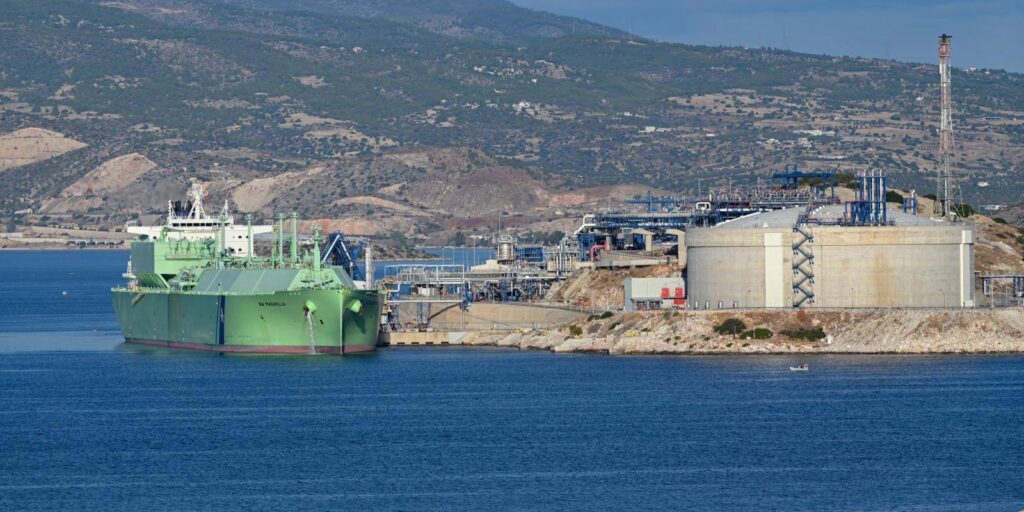
This swing of the infrastructural diplomacy speaks clearly of the fact that the geo-economic competition is suppressing the classical geopolitical conflicts. Thus, the Balkans are becoming an arena in which Beijing, Washington, Brussels, and Ankara are at the same time investing, competing, and testing the resilience of the new security architecture of trade, and in some segments, even the securitization of everyday life through digital mechanisms of control of transport systems. The energy dimension is becoming especially strong because the European Union is accelerating diversification, spreading its LNG capacities in Croatia and Greece, and investing in gas connectors towards the internal part of the Balkans, while American companies are positioning themselves in the field of gas and renewable energy sources, and Russia is continuing to use its intermediary structure to maintain its influence.
At the same time, the infrastructure that once seemed as a peripheral horizontal access is now becoming the main artery of European supply. Road and railroad paths from Thessaloniki via Skopje and Belgrade, to Budapest, are taking the shape of a “Balkan axis” of the new economic geography, and digital infrastructure, along with the growth of investments into cyber protection, is accelerating integration of the region into global networks of goods and data. Regarding this, not even the real weaknesses are disappearing: corruption, political fluidity, and slow alignment with European norms represent a break that is diminishing the credibility of Balkan states as reliable partners.
In the countries outside the EU, such as Serbia, B&H, and Albania, the geo-economic choices often overlap with political loyalties, which is opening up the door to foreign powers to invest in a way that is creating long-term dependencies. In this way, a “fragmented integration” is being formed – a model in which a region functions as a network of parallel influences, and not as a unique market space, thus making the establishment of a coherent trade policy difficult.
In 2025, the Balkans thus become much more than a geographical crossroads: it transforms into a breaking point between the old industrial logic and the new, network-like connected economy of the Global South and the East. While the world trade flows are shifting towards southern and middle corridors, the region is acquiring geostrategic significance for the European supply of energy, goods, and digital resources.
In the end, the future role of the Balkans depends on the ability of the states to introduce transparency, strengthen legal security, and develop regional coordination. If they succeed, Southeastern Europe might become the center of connection between three continents; if they fail, then they risk forever remaining just a temporary bridge between the interests of others. In any case, the Balkans once again stand at the middle of world flows – this time as a seductive, but unstable axis of global trade.
Author: Miljan Petrović