
June 2025
In the conditions of global conflicts, energy disruptions, and fragmentation of market flows, I see the defense industry of Southeastern Europe as a sector that is once again taking up the central position in national strategies, because it acts like a political DNA of the region that reacts to pressure from outside and weaknesses from within. Former industrial systems that many perceived as a relic of the Cold War, nowadays function as an active source of economic gains and foreign policy positioning, which opens up a series of questions regarding whether this trend is based on realistic capacities or only on the short-term global cycle of demand.
Since the beginning of the war in Ukraine in 2022, the demand for conventional arms has suddenly risen, while European countries are attempting to make up for their limited production capacities. Countries like Serbia, Bosnia and Herzegovina, Bulgaria, and Croatia, with facilities inherited from the Yugoslav and Warsaw period, are in a specific position, between modernization and profit. In other words, the region is using the industrial infrastructure as a response to a global virus of instability, but such an approach asks for a clearer assessment of sustainability. This is opening up a series of questions regarding how state policies adapt to an increase in interest in the market.
From 2023 to 2025, the exports of the defense industry of Serbia, Bosnia and Herzegovina, and Bulgaria rose by more than 40%, which indicates an intensification of cooperation with the EU countries that are seeking ammunition and spare parts. The main markets no longer lead towards the Middle East and Africa, but include the European customers, and this opens up a series of questions about the long-term implications of these deliveries. In other words, the industry no longer functions solely as an economic sector, but has become an extended hand of foreign policy.
Companies such as Krušik, Igman, and Arsenal are adapting their production standards to NATO protocols and are broadening their cooperation with Western suppliers. These transformations come from market demands, but still have a political component as well, given that they contribute to a gradual adjustment to the Western security structures. This is opening up a series of questions regarding how prepared the region is to take up the responsibility coming from this direction.
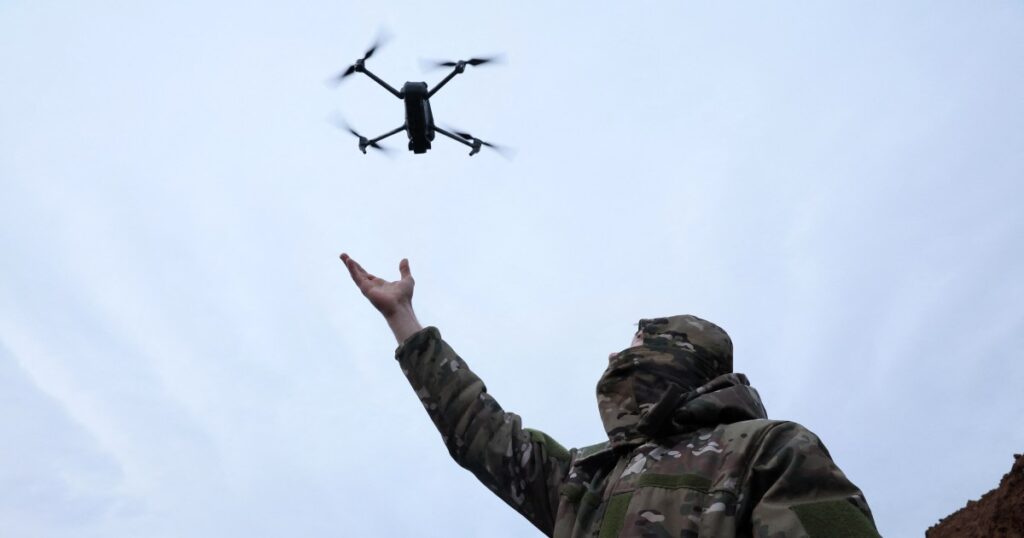
In parallel with that, there is a new generation of private producers who are developing drone technologies, electro-optics, and command systems. These companies, which often emerged from the startup ecosystem, contribute to the development of the dual-use industry, where the border between civilian and military use is speedily reduced. In other words, the technological sector of the region is entering a phase in which civilian and military production are no longer seen as separate categories.
The most significant change in the last several years refers to the integration of artificial intelligence, robotics, and adaptive production. The production facilities in Užice, Kumanovo, and Sopot are developing digital platforms for ballistic testing simulations, while centers in Sarajevo and Niš are working on software for predictive maintenance and line optimization. This opens up a series of questions regarding whether digitalization will become a sustainable mechanism of production improvement, or just a passing experiment in the industry.
Cooperation with academic institutions and the expansion of military-technological incubators are becoming a significant part of industrial development. Such models, inspired by practices from Israel and Turkey, combine public investment and private capital for developing autonomous systems, UAV platforms, and advanced sensors. In other words, the state and the private sector are attempting to create a sort of social immunity of the industry to global problems.
On the other hand, modernization is facing challenges such as the lack of professional staff, slow advances in standardization, and dependence from import components. This is opening up a series of questions about the long-term sustainability of development, especially in terms of global competition.
The defense industry in the new geopolitical reality functions as an extended hand of foreign policy. The countries of the region, even though often formally neutral, are suffering from pressure exhibited by the great powers to limit or redirect their export flows. The European Union and the United States of America insist on end-user control, while Turkey, the United Arab Emirates, and China are offering investments without political conditions. In other words, the region is shifting back and forth between two models: strategic partnership and pragmatic multi-vector cooperation. This opens up a series of questions about whether such an approach ensures stability.
The risk of abuse, technology transfer, and informal export channels remains high. Investigations conducted in the countries of the region in the last two years have led to discoveries of deliveries into zones that are under sanctions, which is causing diplomatic tensions and increased monitoring from the international institutions. This is opening up a series of questions about the ability of state mechanisms to prevent systemic lapses.
In 2025, the defense industry of Southeastern Europe represents a mixture of traditional capacities and the new technological economy. Its future depends on whether countries can establish a balance between economic efficiency and political responsibility. In other words, the success of the industry does not depend solely on production, but also on the control of technologies, markets, and political processes.
If the region wishes to maintain a relevant position in the new security architecture, it will have to develop regional mechanisms of coordination, transparency, and joint action. Otherwise, the defense industry could remain a sector limited by global pressures and local weaknesses, as a chronic example of industrial dependence, without a clear strategy of development.
Author: Miloš Grozdanović