
August 2025
Two years after the coup d’état that changed the government in Niger, the country finds itself examining its own foreign-policy orientations and internal weaknesses, whereas the breakup with conventional partnerships and the rise of new alliances have formed the political and security reality of the country. The dissolution of the institutional continuity has led to the suspension of Niger’s membership in African and regional organizations, thus creating a new foundation for a new, geopolitically polarized agenda of the government; this changed the collective response mechanisms in the region and opened up a space for foreign actors who offer alternatives to Western partnership models.
Right after the government takeover, the government in Niamey turned to the regions and countries that were promising fast security and political support, which accelerated the formation and consolidation of regional platforms that conflicted with traditional Western frameworks. Formalization of the alliance of the Sahel countries and departure from ECOWAS reflected not only a rhetorical breakup, but also the institutional redefinition of the role of Niger in the West African security and economic architecture. This change weakened collective instruments for crisis management and created a permanent political fragmentation within the region.
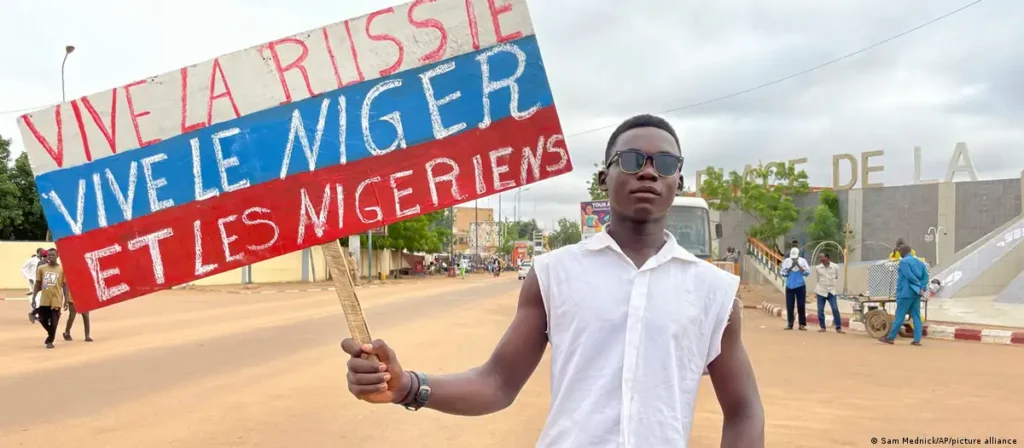
At the same time, the growing presence of Russian security entities and a more intense military and political cooperation with Moscow (in various formal and informal forms) has changed the parameters of security cooperation: this engagement, which, in some cases, replaced or supplemented Western capacities, led to a change of approach to intelligence exchange, military training, and security planning. This redistribution of influence has empowered the regime in a short period, but at the same time, it increased the geopolitical tensions and created new channels of dependence that impact the sovereignty and long-term security abilities of the country.
The security effects of these changes also manifest through the redefinition of regional operations for combating armed groups: the drawback from some multilateral frameworks and turning towards national priorities (including the protection of strategic objects and energy potentials) has weakened the cohesive regional reaction to threats that surpass the national borders. This resulted in militant groups finding a more suitable operational space, while the local communities are exposed to a higher risk, which directly affects the stability of the entire border zone and the logistical network of humanitarian aid.
The economic image reflects a paradox: the short-term stabilization of revenues from specific sectors and the arrival of new investors are not surpassing the systemic challenges that target agriculture and public finance, especially in the conditions of reduced access to Western donations and loans. The projections and field reports show that, even though some prices and poverty rates are temporarily under control thanks to good harvest or market opportunities, the vulnerability of the majority of the population remains high and depends on the security situation, and thus, of the economic policies adopted by the government. This existential pressure on social reproduction catalyzes further political instability if not addressed through inclusive and sustainable measures.
Given the comprehensive transformation of the geopolitical position, we see three possible scenarios for the medium-term future (12-36 months), ranked by the possibility and implications. The first and thus most probable scenario implies the consolidation of the regime through alliances with the Eastern partners and regional actors, while maintaining autonomy in making decisions about the military, but with a gradual international isolation. In this scenario, the security situation might remain infringed at the level of localized conflicts and criminal activities, but the country would remain in control over the key resources. The second, less favorable scenario predicts an escalation of non-military threats and an increase in the humanitarian pressure due to the weakening of regional cooperation; under these circumstances, the economic shocks and the aggravation of public services can lead to a wider social discontent. The third, more optimistic scenario, implies a diplomatic reintegration through the conditions of compensations and reforms, combined with responsible policies of internal management, that would ensure the return of foreign partners and renewal of joint security mechanisms; however, this outcome asks for significant compromises and clear results in the field of management and human rights.
In conclusion, Niger is nowadays in between the East and the West, in the conditions of restructured regional architecture; the two-way pressure will form the internal policies and security responses of this country, whereas the ability of local actors to manage resources, ensure basic services and renew the trust of the citizens will determine whether the transition will lead to relative stabilization, or in fact to a deepened crisis. The institutional response, supported by a realistic international approach that balances between principled demands and pragmatic instruments, remains the key to minimizing negative scenarios in the following three years.
Author: Tanja Kazić