
October 2025
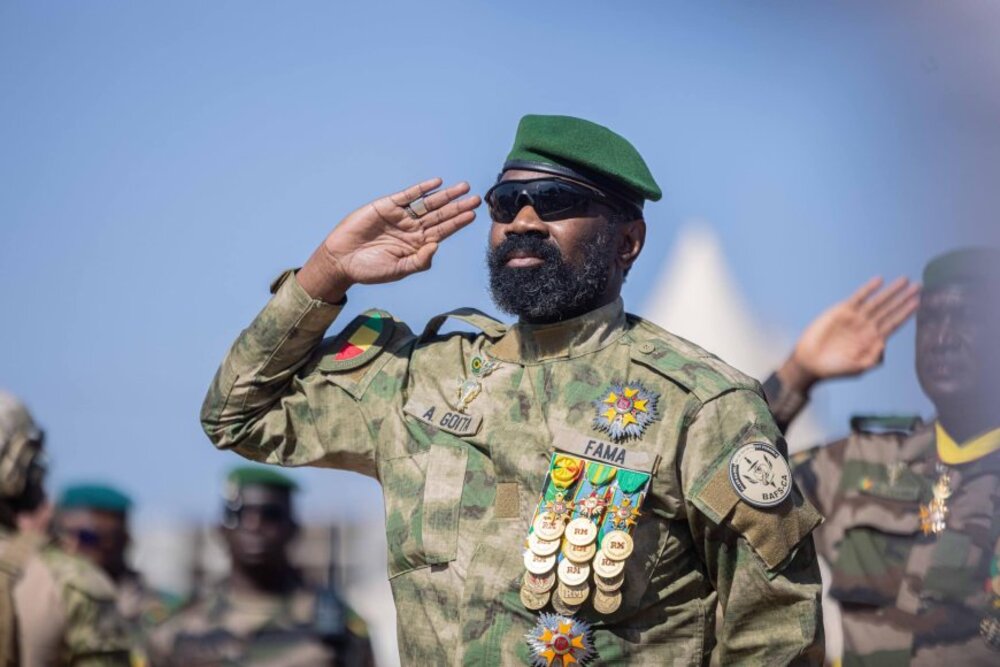
The political life in Mali has once again entered a zone of deep instability, with no indication of stabilization of the situation in the near future. Namely, the protests that are continually being taking place during 2024 and 2025 in the capital Bamako, even though not as mass as the ones recorded in 2020 when, in the end, the then President Ibrahim Boubacar Keita was deposed, or the ones in 2022 against the French influence in the country, clearly show the growing dissatisfaction with the prolongation of the transitional period under the military government. After Colonel Assimi Goïta’s Government on several occasions postponed the return of civilian power – first to 2022, then to 2024, and now to 2026 – the social pressure is increasingly strongly manifesting through demonstrations of student organizations, trade unions, and political movements, which call for a transparent and realistic path towards elections.
Four years after the 2021 coup, Mali is in a state of political paradox: even though the intensity of conflicts with Jihadist groups locally is reduced in some region, thanks to shifting the focus of operations and the presence of foreign military partners, and especially members of the African Corps (the successor of the Russian private military company Wagner), the political legitimacy of the regime is weakened. The old question remains: can the military, which took over twice in the last decade (in 2020 and in 2021), be the guarantor of democracy in a country that was pushed into an enchanted circle of crises indeed by military activism?
When Goïta consolidated power in 2021, the Transitional Government promised restoration of institutions, fights against corruption, and stabilization of Northern and Central regions that are currently under the influence of Al-Qaida (JNIM) and the Islamic State in Sahel. In the beginning, the public support was high, but since 2023, it gradually declined due to economic stagnation, ECOWAS international sanctions (temporarily introduced in 2022), and limited political pluralism.
By 2025, prolonging the transition has become the central political issue. The M5-RFP opposition bloc, part of the civil society, and numerous trade union confederations are accusing the government of using security threats as an excuse for keeping the power, while the official Bamako states that “elections cannot be held without previous territorial stabilization”. In practice, the institutions are growing increasingly centralized around the military elites, while independent media are under the control of regulatory bodies.
Mali’s foreign policy orientations have also gone through a radical transformation: after the withdrawal of the French forces from Operation Barkhane (in 2022) and the departure of the UN Mission MINUSMA (finalized in 2023), Bamako relied upon Russian military assistance, and predominantly on the presence of the African Corps. This cooperation brought along some short-term results in the field, but also distanced Mali from Western partners and the financial flows of the European Union.
On the other hand, China is gradually expanding its economic influence through infrastructural projects, the mining sector, and telecommunications, in accordance with its long-term strategy in the Sahel region. Even though Beijing formally sticks to the principle of “non-intervention”, its fortification in the fields of energy and transport is becoming the key factor of the new foreign policy architecture of Mali.
Even though the 2024-2025 protests did not reach the scope of previous mobilizations, it is a fact that the dissatisfaction is spreading even outside Bamako, which speaks of the growing cleavage between the military government and the citizens. The reactions of the security forces varied, from a moderate breakdown of gatherings to sporadic arrests of opposition activists, which caused criticism from the international human rights organizations.
In the spirit of the development of the situation in the field until now, it is clear that contemporary Mali faces three scenarios, which imply gradual liberalization, authoritarian consolidation, or, in fact, internal erosion of the regime. In case the military junta decides to truly accept to hold elections in 2026 in a timely fashion, the civilian institutions would once again go back into the hands of the citizens, while the complete opposite scenario would imply the continuance of centralization of power, with relying on the security apparatus and foreign partners, among whom Russia maintains primacy, and which would lead to authoritarian consolidation. Such a development of the situation would consequently lead to an internal erosion of the regime, which would be the result of deepening the cleavages within the national armed forces. In this way, a sort a state of risk of a coup would be created, given that it has become clear until now that Mali is not immune to coups as a modality of government overthrow, as well as that such activities are frown upon, but still tolerated, especially when masked with a phrase of a “good” or “democratic” coup.
Therefore, we can predict that Mali will enter the year 2026 as a country entrapped between the military and security logic and the pressure of society to restore the institutional order. The future of the transition will depend on the ability of the government to regain the trust of the citizens and ensure at least a minimum political pluralism – contrary to that, the country might remain trapped in the enchanted circle of instability, which marks the entire Sahel region.
Author: Tanja Kazić