February 2026
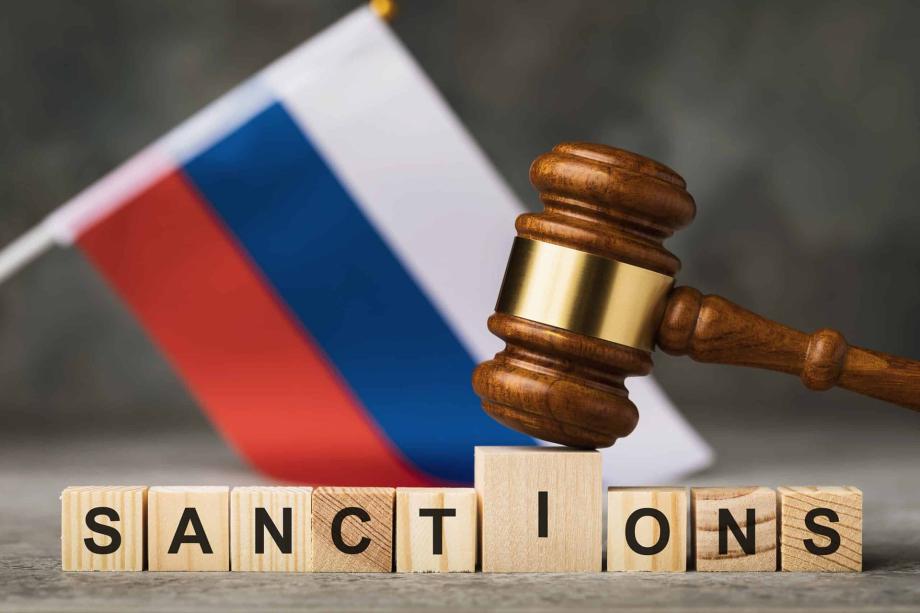
For years, the Western Balkans has been living under the regime of Western sanctions against Russia without a clear answer to the question of whether the region represents a peripheral area of European politics or its latent security extension, and therefore the states of the region, each in their own way, are trying to reconcile the formal aspiration towards membership in the European Union with historical, energy and political ties with Moscow, whereby the political elites generally do not want an open confrontation with either Brussels or the Kremlin, but maintain a strategy of selective adaptation that allows them to survive in conditions of increased foreign political pressure and internal economic restrictions. European institutions, which I observe in detail through the prism of their regulatory and financial mechanisms, increasingly expect not only declarative compliance with sanctions but also operational implementation, including control of financial flows, trade routes and energy arrangements, but at the same time leave room for political flexibility because they understand that excessive insistence on a rigid approach can produce a counter-effect and push individual states of the region into a more open form of strategic autonomy.
In this regard, Serbia represents the most complex case, because it formally negotiates EU membership, but maintains intense political and energy ties with Russia, relying above all on gas arrangements and diplomatic support in international forums, while at the same time developing economic relations with the West that many times exceed trade with Moscow, which creates a situation in which the government has to balance between the conflicting expectations of the domestic public, the business community and international partners. Bosnia and Herzegovina, as a complex state structure with multiple decision-making centers, reacts unevenly because some entities and political actors openly criticize the sanctions and maintain political closeness with Russia, while others strive to demonstrate loyalty to the European course, so the result seems to be an institutionally fragmented response that reflects internal power relations more than a clearly defined foreign policy. Montenegro and North Macedonia, as NATO members and countries that have advanced the most in the integration process, formally implement sanctions without major deviations, but face economic consequences that particularly affect tourism, investments, and certain trade sectors, which is why the authorities are trying to amortize losses through European funds and bilateral arrangements with member states.
Russia, on the other hand, does not treat the region as a primary geopolitical battleground, but as an area of opportunistic action in which it can produce a disproportionate political effect with relatively limited resources, relying on historical narratives, media presence, religious ties and energy instruments, while not trying to take full control but to preserve a minimum level of influence that allows it to remain a relevant factor in European calculations. Such an approach generates a kind of controlled chaos in which no side has complete dominance, but none leaves the field, so the region functions as an area of constant tactical competition instead of strategic resolution.
The European Union, meanwhile, is trying to integrate the Western Balkans into its wider security architecture through financial aid, regulatory alignment and political dialogue, but at the same time avoids taking full responsibility for stabilizing the region, which produces an ambivalent signal to local elites who conclude that it is pragmatic to maintain a certain degree of foreign policy uncertainty. This kind of balancing strategy, which we sometimes mistakenly call neutrality, actually represents active risk management in conditions of limited capacity, because the states of the region have neither the economic strength nor the security resources to withstand an open break with any great power that affects them.
The analytical depth of the crisis becomes visible when looking at the energy sector, where sanctions are not only manifested through bans but through the gradual transformation of markets, infrastructure and investment flows, so countries that have been dependent on Russian energy sources for decades are now rapidly looking for alternative sources, including LNG terminals, interconnectors and renewable energy sources, but such changes require time, capital and political stability, which the region chronically lacks. At the same time, business communities try to preserve trade ties with the Russian market using intermediary channels, re-exports and complex financial structures, thus creating a gray zone of economic activities that does not formally violate the sanctions, but actually mitigates them.
In a social sense, sanctions against Russia contribute to the securitization of everyday life, because political discourse increasingly interprets economic difficulties, inflation, or energy problems through the prism of international conflicts, thus spilling foreign policy issues into the domestic political arena and affecting electoral behavior, media narratives, and the perception of national interest. In this regard, political elites use the topic of sanctions as an instrument to mobilize support, either through emphasizing European solidarity or through the rhetoric of protecting national sovereignty, while actual policies remain much more pragmatic than public discourse suggests.
Ultimately, the Western Balkans is not developing a single strategy towards Russia, but rather a series of partial adjustments that reflect the specific political systems, economic structures and foreign policy priorities of each state, so the region as a whole acts not as a block but as a mosaic of different approaches, from full alignment to selective cooperation. Such heterogeneity makes it difficult for the European Union to shape a coherent policy towards the region, but at the same time it allows local actors to maintain room for maneuver in an increasingly fragmented international environment.
Therefore, adaptation to sanctions strategies should not be seen as a linear process of moving closer to the West or moving away from Russia, but as a long-term state of strategic ambivalence in which the states of the region try to maximize their own stability with minimal political costs, counting on the fact that the global power relations will remain fluid enough in the coming years to allow them to continue the policy of balancing without a final choice of sides.
Author: Miljan Petrović