August 2025
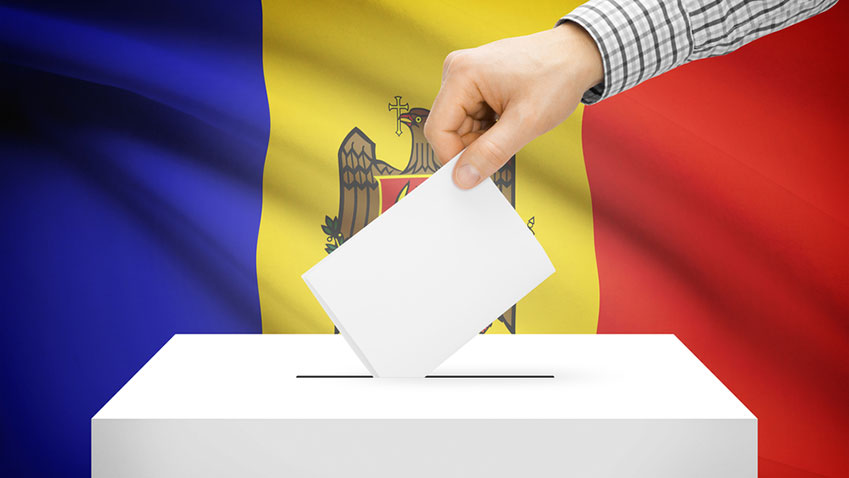
The upcoming parliamentary elections in Moldavia, scheduled for September 28, 2025, are entering the political orb as an event that shapes the regional momentum, because they symbolically represent a test of democratic resilience in a space in which European aspirations, post-Soviet identity layers, and interest spheres of great powers collide. In this complex schedule, we recognize a process which is taking place in parallel at an institutional, social, and geopolitical level, because of which the elections functions as a sort of a referendum regarding whether the citizens wish to continue the course promoted by Maia Sandu, or they wish to come closer to a more stable, traditionally linked Eastern framework, in which Moscow remains a significant reference actor.
During the last three years, Moldavia entered a state in which economic oscillations, growing energy expenses, and strong competition of information narratives, are creating a climate that resembles the analytical depth of a crisis, because the society is absorbing every day the combined pressure of internal fatigue and external direction, and thus, in such a dynamics, the political field in which the West states that it sees Moldavia “as the next line of the defense of democracy” is crystalized, while Moscow is, at the same time, shaping the narrative about the urgency of stability and balanced development in a country that traditionally gravitates towards the post-Soviet space.
The Government of Maia Sandu insists on an European course, reforms, and harsh anti-corruption framework, but the citizens – faced with the decline of the life standard – show fatigue from the reforms that do not provide fast results, and thus, 53 percent of population stated in 2025 polls that European integrations do not bring direct use, which opens up a political space used by the opposition to mobilize voters through economic populism and the criticism of the European course, especially in the Southern and Eastern regions, where the Russian influence has a historically greater intensity due to cultural, economic, and diaspora connections.
The opposition structures, led by the Socialist block and the Şor Party, are building up the support through a combination of local dissatisfaction and trans-national political signals, while in this framework the phenomenon of controlled chaos is formed as well, because foreign actors are creating a pressure that does not surpass the threshold of direct investment, but sufficiently impacts the political atmosphere on the field. Regarding this, Moscow is using three very effective instruments – energy dependence, information channels, and sub-political networks that transmit their interests without formal institutionalization.
The energy segment remains an essential part of the security architecture of Moldova, because Russia is controlling transit through Pridnestrovie, and is using the prices of gas as an instrument that impact the everyday economic security of citizens, while the digital space is filled with narratives that have been contesting the European course since 2023 through presenting the government as excessively relying on Brussels, which is producing distrust towards the reform block. Moreover, the sub-political block functions through organizations, religious structures, and business networks that transmit political messages without open declaration, thus additionally complicating the strategic stability of the country.
Moscow is not insisting on a complete political control of Çhişniău, but prefers an environment in which Moldova maintains some level of strategic ambivalence, thus avoiding fast commitment to the NATO infrastructure, and thus such principle fits into a broader model in which Russia is not seeking domination, but a balance that prevents permanent suppression of its interests, while Beijing is using the same space to build up its approach that relies on trade, telecommunication, and infrastructure projects, leaving the political issues on the side, but long-term speaking, strengthening its position through a pragmatic form of economic diplomacy.
The European Union is increasing the financial and technical support, including the macro-fiscal package of 145 million euros intended for the stabilization and diversification of energy resources, but Brussels is, by all means, paying attention not to create an excessive pressure that could produce a counter effect in the form of rise of the anti-European sentiment, while Romania, as the closest ally of Moldova, is balancing between the strong support and deflecting the perception of excessive influence that uses the opposition for an additional polarization of the voting body.
In a global context, Moldova is becoming the macro model of the new Cold War, because in its territory, the interests of the US, EU, Russia, and China intertwine, whereas Washington is maintaining a limited, but still clear support to the pro-European structures, while Moscow and Beijing are working on demonstrating the limits of the Western influence, and the Chinese strategy – based on the principle of stability without insisting on political changes – is introducing an additional layer of complexity into an already fragmented political system of the country.
In such an ambiance, in which narratives, economic models, and identity policies collide, Moldova is taking the shape of a laboratory of the twenty-first century, because it is a field of combats led without a military dimension, but with a strong securitization of everyday life, where the issues of security, energy, information, and political decision remain the components of a wider geopolitical competition. Therefore, the upcoming elections are gaining the weight that surpasses the borders of national politics and become an indicator of resilience of democratic processes in the post-Soviet space.
If Moldova maintains a peaceful and transparent electoral process, this is sending a signal to the region – from Caucasus to the Balkans, where the questions of political autonomy are formed in the shadows of global tensions while the West seeks balance between support and non-competition, and Moscow continues to insist on preserving the zone of controlled instability that functions as a protective layer against the wider spread of Western cultures.
Looking into the very near future – the end of September 2025, we come to a conclusion that parliamentary elections in Moldova are an event that surpass the framework of the local electoral cycle and thus becomes a reflection of the global order in the making, because democracy stops being implied in advance and turns into a strategic choice of countries facing with the overlapping crises and competitive geopolitical models. In this way, Moldova is entering the role of a small, but geostrategic important hotspot of contemporary global tensions.
Authors: Miljan Petrović, dr Violeta Rašković Talović