
August 2025
In the summer of 2025, the Gaza Strip is once again entering into the phase of intense destabilization, which resembles, by its characteristics the spread of the virus of instability in a fragile regional organism, whereas the security image is changing day by day, thus demanding for an analytical approach that would clearly differentiate the acute reactions of the actors from chronic structural causes. This opens up a series of questions about the long-term sustainability of the security architecture that has been relying in recent years on the combination of informal rules, mediation channels, and political calculations that are no longer functioning stably.
The escalation in Gaza did not happen suddenly. It comes from a series of factors that have been accumulating for a longer period of time, thus weakening the social immunity of the region towards shocks. The internal political crisis in Israel, fragmentation of Palestinian structures of power, and the growing regional confrontation are creating an environment in which each incident in the field asks for urgent political reflexive reactions, but without creating a sustainable strategic framework. In other words, the security system functions in a state of constant pressure, without a clear direction.
The Israeli Government is entering during the summer of 2025 into a new phase of political fatigue. Internal cleavages, protests against the judiciary reform, and disagreements within the security sector are creating a climate in which the political DNA of the state is showing signs of imbalance. The Prime Minister Benjamin Netanyahu is balancing between his hard-line partners and the warnings of the military establishment that the new offensive in Gaza can set in motion a wider regional confrontation. This opens up a series of questions about whether the Israeli leadership could, at the same time, direct internal crises and maintain the external projection of force.
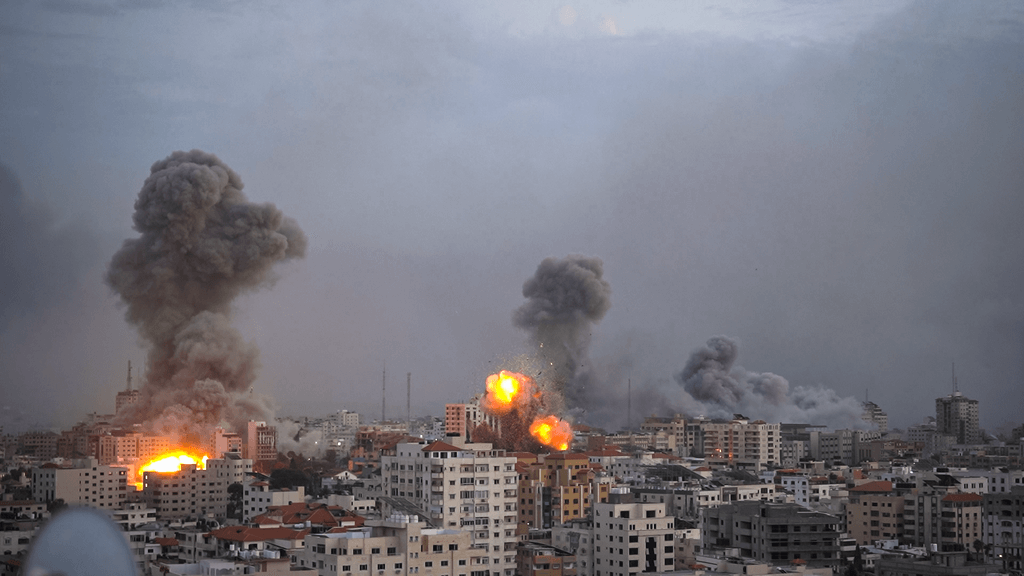
The last series of rocket attacks from Gaza represented a signal that the Israeli Government used for launching air strikes against the Hamas infrastructure. These strikes have a dual function: degradation of the military capacities of the enemy and maintaining the narrative on security as the fundamental priority of the state. Still, the Israeli strategy remains tactical because it does not offer a sustainable post-conflict plan. In other words, Israel is managing symptoms, and not the causes.
Hamas, despite many years of blockage and partial loss of legitimacy among the Palestinian population, has been renewing its political and financial connections over the last six months. According to the estimates provided by the Western intelligence structures, Iran is strengthening the logistical and technological support, including assistance in the production of UAVs. At the same time, there is a growing cleavage within the movement between the political wing, which believes that the indirect contacts with Egypt and Qatar are necessary for avoiding total isolation, and the Izz ad-Din al-Qassam military wing, which insists that the new cycle of conflict is necessary to prevent, as they say, “the erosion of resistance”. These internal cleavages are weakening the political DNA of the Palestinian governing system and are thus making the situation unpredictable.
The regional context is additionally complicating the state in the field. After the Iranian rocket strike against Israeli territory at the beginning of 2025, the relations between Tehran and Jerusalem are entering a phase of open cold confrontation, in which the indirect mechanisms of pressure are being used. Hezbollah in Lebanon, the Shia militias in Syria and Iraq, as well as a series of other factors, function as channels of indirect conflict. This opens up a series of questions about the possibility that any escalation in Gaza spreads fast into a wider regional conflict.
The Western forces, faced with the war in Ukraine and internal political tensions, are increasingly often perceiving Gaza as a localized conflict. The American diplomacy is calling for de-escalation of the situation, but without a comprehensive plan of engagement that would stabilize the field. The European Union remains a dominant donor of humanitarian aid, but it does not have a political position that would enable a more serious impact on the course of events. In other words, the international response does not follow the speed of the spread of the crisis.
Until September 2025, the number of civilian victims rose to a little bit less than 4,000, and hundreds of thousands of people once again remain homeless. The energy infrastructure in Gaza stops functioning, and the medical system survives thanks to the extraordinary donations of fuel and equipment exclusively. Such data point to a social collapse that produces generational consequences – the disappearance of perspective, decline in educational capacities, and entrenchment of the feeling of hopelessness. This opens up a series of questions about how the future generations of Palestinians will grow in such an environment.
At the same time, Israel is faced with an increasingly strong criticism due to the use of force and an increasingly weak position in relations with the countries of the Global South. Saudi Arabia is temporarily freezing the talks on normalization, and Turkey is increasingly openly supporting the Palestinian resistance structures. In other words, the political expense of Israeli operations grows in parallel with the military engagement.
The Gaza crisis, in 2025, continues to represent a symptom of a wider collapse of the political architecture that has, for more than two decades, maintained the appearance of manageable conflicts in the Middle East. Israel still seeks military solutions for political problems, Hamas is constructing the narrative of resistance in exchange for the institutional capacity, and the international community reacts slowly and fragmentarily. The political DNA of the region remains burdened by chronic imbalance.
If a new diplomatic mechanism is not established to include the key regional actors, such as Saudi Arabia, Turkey, and Egypt, the chances for stabilization remain minimal. In other words, without a new political architecture, the conflict will remain in a phase of repetitive cycles of violence. To the contrary, the new chapter of the conflict in Gaza will not be just one in a series of armed conflicts, but a clear identifier that the current concept of deterrence does not function as a mechanism of regional stability.
Author: Miloš Grozdanović