
July 2025
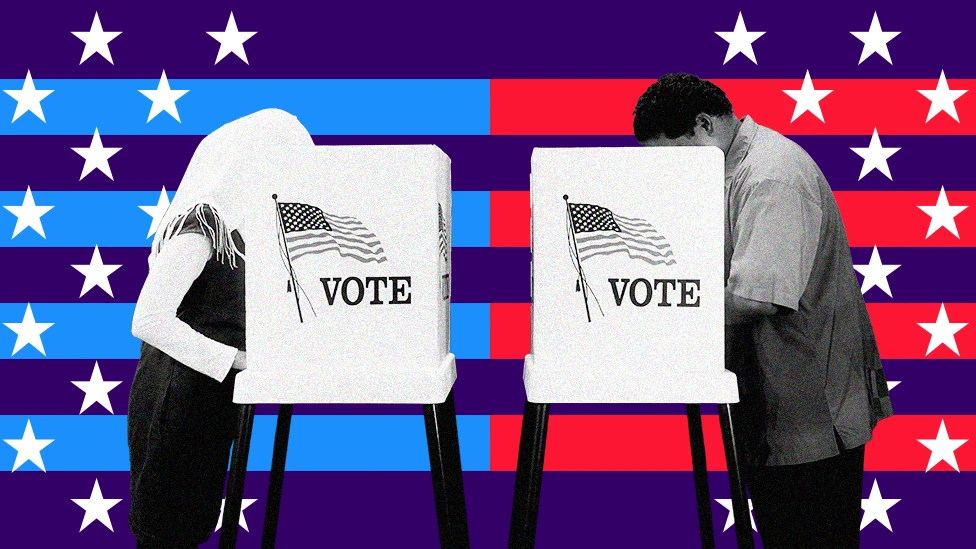
The elections in the United States of America in 2024 have produced a high level of political polarization, which is directly affecting the formulation of foreign policy. The period after the elections shows that the internal cleavages no longer represent only the result of party competition, but are becoming a structural factor that defines the priorities in security, economy, and geopolitical processes. In other words, this form of polarization functions as a virus of instability that is hindering the social immunity of the institutions and is long-term changing the political DNA of the American system. This is opening up a series of questions about the sustainability of the foreign policy capacities in the conditions of constant internal tensions.
The Administration, even though formally consolidated, depends on the ability of the White House to balance between dominant internal interests and the foreign policy obligations towards key regions, including China, the Middle East, and the Western Balkans. In other words, maintaining a functional foreign policy continuity asks for a stable internal framework, and this opens up a series of questions about whether a divided society can efficiently support the long-term strategic processes.
The polarization in the US at the beginning of 2025 surpasses the classical differences between the Democrats and the Republicans and penetrates cultural, economic, and geopolitical segments of the public. The differences between the coasts that favor multilateralism and climate diplomacy, and the internal regions that insist on economic and energy independence, represent a stable source of tensions. The economic interests are additionally complicating the situation, because the corporate lobby and the tech sector stress the significance of global supply chains, while the working class asks for the protection of domestic production. In such an environment, the Senate and the Congress can limit or slow down the key foreign policy initiatives, which, again, opens up a series of questions regarding the real operational flexibility of the White House. In other words, the political DNA of the American system shows some signs of adaptation, but without any guarantees that the institutional immunity will be sustained.
The Administration defined four main focuses for the 2025-2026 period as follows: deterrence and competition in the Indo-Pacific, with a special emphasis on the military and technological cooperation with the allies; managing crises in the relations with Russia, with the continuance of sanctions and providing support to Ukraine; limited stabilization of the key actors in the Middle East; and maintaining security and political balance in Europe and in the Western Balkans. The integration of economic interests with the security needs is the central task of the Administration, but the continuity of these policies depends on the preparedness for political compromises, which, once again, opens up a series of questions about the long-term fulfilment of the defined priorities.
The polarization and the foreign policy focus of the United States after 2025 have several consequences. The reduced flexibility in the reaction to crises has become a visible symptom of the weakened institutional immunity. At the same time, relying on allies such as NATO, Japan, South Korea, and Israel is on the rise, which, in other words, means that the American strategy is more and more functioning through coordinated mechanisms, and not through unilateral impulses. The domination of short-term economic and security goals over the long-term reform processes is additionally complicating the planning processes, especially in the field of environmental and technological transformation.
The most probable outcome for the period of 2025-2026 is strategic pragmatism, with limited flexibility, where the internal cleavage defines the framework of actions of the United States of America, and the foreign policy priorities remain situated between economic, security, and geopolitical demands. In other words, the American political DNA is still attempting to maintain a stable form, but the virus of instability is setting up the borders to this process and opens up a series of questions regarding the resilience of the system to long-term pressures.
After the 2024 elections, the United States of America represents an example of how internal polarization shapes foreign policy capacities. The geopolitical priorities remain clear: maintaining deterrence in the Indo-Pacific, stability of Europe and the Western Balkans, and controlled intervention in the Middle East. However, the success of these policies depends on the ability of the administration to manage internal cleavages, coordinate with allies, and react to global crises that could destabilize the already overburdened institutional organism. In other words, the American foreign policy functions in the conditions of constant fight for maintaining social immunity, and this opens up a series of questions about its long-term efficiency.
Author: Miloš Grozdanović