
February 2026
The war in Syria, which began in 2011 as a spontaneous social and political protest against the regime of Bashar al-Assad, soon transformed into a multi-layered conflict, in which local, regional and global interests were intertwined, creating a suitable climate for the expansion of extremist organizations, especially the so-called Islamic State (IS), which took control of a large part of Syria and Iraq by the end of 2019. In March 2019, the Kurdish Syrian Democratic Forces (SDF), with the support of an international coalition led by the United States of America, ended the five-year rule of the “caliphate” of the Islamic State, whereby the issue of surviving terrorists, but also foreign terrorist fighters (FTFs), became crucial. In this context, detention centers and prisons were established for arrested fighters, among which the most significant are the Al-Sinaa and Al-Hasakah central prisons in Hasakah, and the Tabqa prison, where mostly men are detained who have been confirmed to have taken an active part in the fighting and other logistical and backroom activities of the “Islamic State”. In parallel with the above, a certain number of foreign terrorist fighters (about 5,700 of them) were transferred to prisons and detention units in the territory of neighboring Iraq, to relieve local capacities and reduce the concentration of extremists. As part of that strategy, closed reception centers for family members, especially of foreign terrorist fighters, were established, among which the most famous are the Al-Hol camps, located in the city of the same name, near the border with Iraq, and the Al-Roj (Al-Roj) camp in Hasakah. The aforementioned camps have become a key mechanism within the implementation of measures to prevent (but, unfortunately, primarily management and remediation) of radicalization, focusing on women and children as potential transmitters of the ideology of the “Islamic State” outside its cradle, but also preventing the opening of any opportunity to join other militant and extremist networks in the region and beyond.
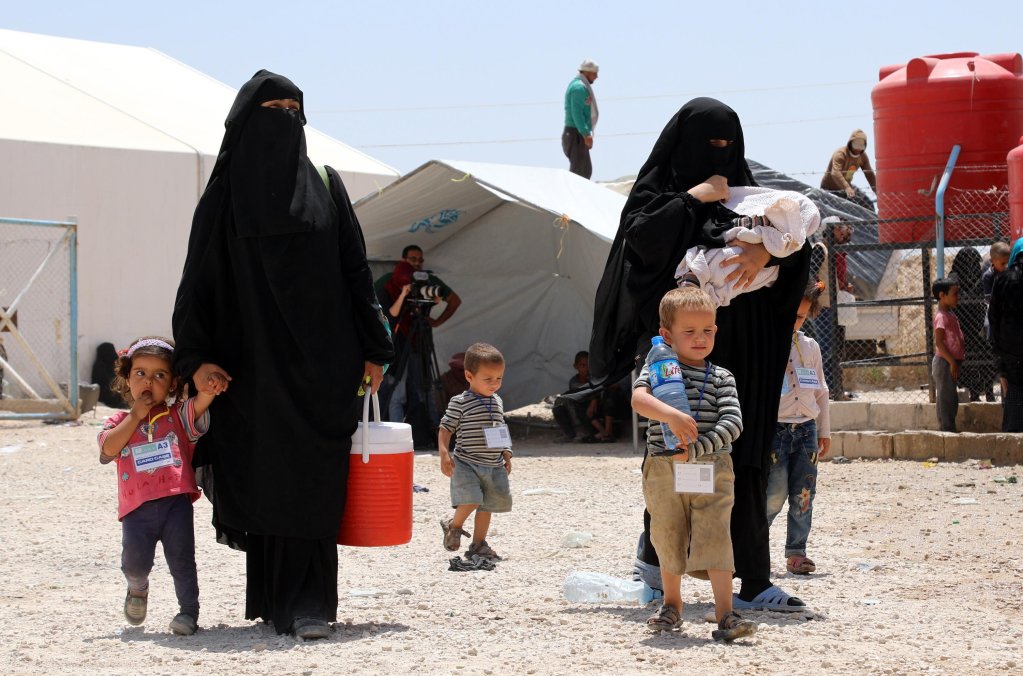
Of the two mentioned, the Al-Hol camp is the epicenter of a complex transnational security dilemma, because until recently it was home to about 6,500 foreign citizens from 44 countries, and a total of about 23,500 people, who were found to have, in one way or another, taken an active part in the work of the former “Islamic State”, and that, in most cases, they see nothing wrong in the attitudes and ideology propagated by this terrorist organization. After the sudden and uncoordinated withdrawal of the Kurdish “Syrian Democratic Forces” on January 20, 2026, several cases of mass escapes from the said camp were detected. According to the Syrian security forces, at least 138 breaches were detected along the 17 kilometers of the camp’s fence, which opens up the possibility that at least that many people left the camp and went in unknown directions, most likely through their homelands, which are often located in the heart of Europe. The Western Balkans are on their way to Europe.
History teaches us that in the earlier period, the Western Balkans served as a transit zone for legal and, more importantly, illegal migration towards the European Union, which the latter’s potential escape of several persons, assuming that they are foreign nationals, indicates the importance of monitoring this event from a security context. In the foreground is the question of the possibility of detecting the movement of the mentioned persons through the territories of the Western Balkan countries; in the second, the potential for the new Syrian regime to raise the issue of the repatriation of a “critical mass” of foreign terrorist fighters and their families to their countries of origin, including the countries of our region. In the third scenario, the unstable management of the camps and the chaotic transfers through controlled and uncontrolled zones have the potential to open up space for this part of the “critical” population to avoid continuing to live in the camps and move to territories in the immediate vicinity of porous borders, which will directly affect the security processes in the region, and then all other regions that are on the way to Europe, including the Western Balkans. Bearing in mind that the three countries of the Balkans – Bosnia and Herzegovina, North Macedonia and Montenegro, as well as the territory of the AP of Kosovo and Metohija, are in the top ten in terms of the number of foreign terrorist fighters, and that there are currently about 8,500 foreigners on the territory of Syria, the threat of activation – and the formation of new “terrorist cells” along this route – is absolutely real.
Mass escapes from the Al-Hol camp and related facilities must certainly not be perceived only as a local incident, but primarily as a signal of the existence of a wider, transnational security problem, which has the potential to directly affect Europe, and therefore the Western Balkans. Precisely because of this, we can say that the current situation indicates the existence of a multi-layered vulnerability in the management and control of foreign terrorist fighters and their families on the territory of Syria and Iraq, from which we can conclude that there is a pronounced limitation when it comes to the capacity to detect cross-border movements. It follows that there is a possibility of transfer and redistribution of the malicious ideology and operational experience of the “Islamic State” along the migration routes, through the Western Balkans, and to Europe. Considering the origins of the current Syrian regime and its organization in extremist currents on the territory of that country, as well as the indicative weaknesses in the control of foreign terrorist fighters and their family members, it is expected that in the coming period there will be a necessity for a well-thought-out and organized repatriation of foreign citizens to their countries of origin, to avoid potential “crises” and the possible emergence of new “terrorist cells” and lone wolves that will with their destructive tendencies try to destabilize the European soil.
Author: Tanja Kazić