
January 2025
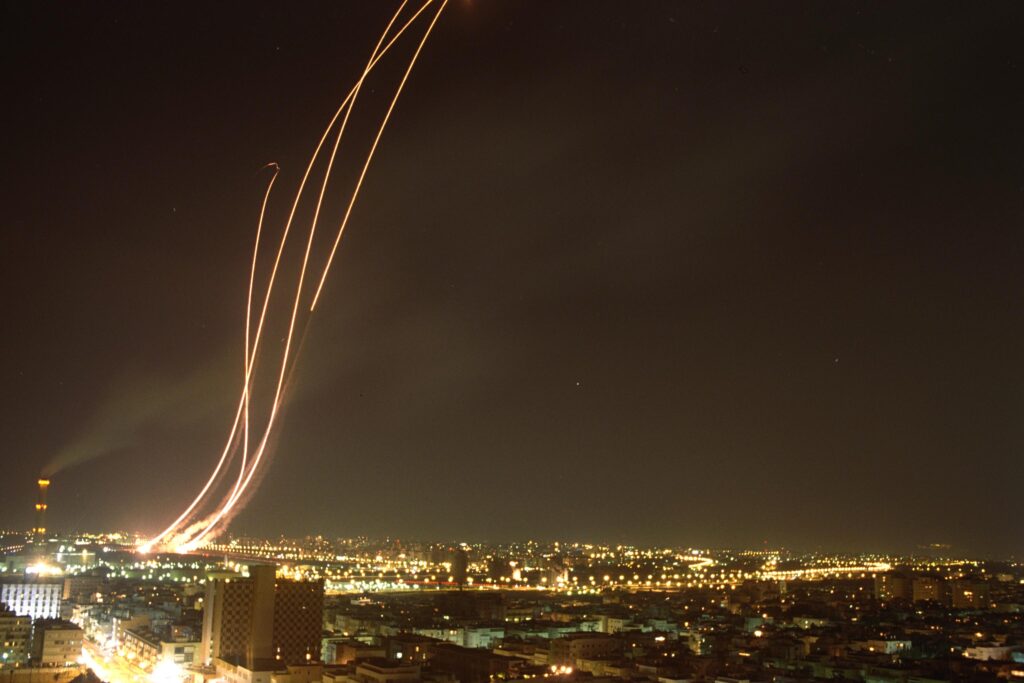
Since October 2024, we have been identifying a trend depicted in the use of artillery – ballistic cruise missiles and UAVs, paired with cyber operations – as a means of a sort of political and military warning, in which the Islamic Republic of Iran has been especially coming to the fore in the previous few months. Namely, it does not escape the analytical eye that, with the use of the previously mentioned means, the intention of Tehran upon conducting the attacks on targets located in the territory of Israel – whether conducted directly or via proxy forces – was primarily to test the anti-rocket capacities of the enemy, demonstrate military and technical capabilities of Iran, and send a political message to Israel and its allies, while the goal of devastating the targets within the Israeli territory was most often marginalized, but in the background, and in some cases even projected as irrelevant. The consequences of such planning and conduct of actions surpass the classical regional constellation – they disrupt these deterrence strategies, impact the creation of alternative supply routes, and introduce a new level of insecurity into the global security architecture.
The Iranian tactics go two ways and rely on direct use of ballistic systems and the use of proxy groups, which operate against Israel from the territories of Lebanon, Syria, Iraq, and Yemen. This combination enables Tehran to send a strong message to Tel Aviv without completely opening a new front, which, in practice, means the launch of individual or cluster attacks, to test the abilities of the adversary to intercept different profiles of aircraft and rockets. The main result of such actions is the establishment of a long-term mechanism of a “repeating threat”, which puts Tel Aviv in a position of existing in an “enchanted circle” of deployment and redeployment of resources necessary for a comprehensive defense of their territory and inhabitants, which, in the end, drastically decreases the operational flexibility of the Israeli Armed Forces.
In such setting, it is obvious that the two “blocs” are made up from Iran and the allied actors from the ranks of the Iranian “Axis of Resistance” on one side, and predominantly Lebanese Hezbollah, Shia militias active in Syria and Iraq, and Houthis from Yemen, and Israel and the allied forces, led by the US, on the other. Regarding Iran, the main interest of Tehran is not, despite its traditionally present rhetoric, to destroy Israel but to communicate a narrative about Iran as a regional force, at the same time deterring the enemy forces from direct intervention and using the existing arsenal as the means of political instrumentalization. In accordance with that, the interests of the factors gravitating within the “Axis of Resistance” are evident, and are based on the need for ensuring continued Iranian support, which individual actors from the specter of paramilitary formations are “paying” through their engagement against Israel, ensuring, in this way, a “lower risk level” for Iran in the process of demonstration of force. On the other hand, the interests of Tel Aviv in this context are based on the preservation of territorial integrity and personal safety of its citizens, and in the end the creation of potential for conducting actions against targets outside its territory, which, at this moment, basically implies the Palestinian territories, as well as the territories from which, on a broader regional level, pro-Iranian elements are being engaged, and notably Lebanon, Syria and Iraq. The allied bloc, gathered around Israel and led by the US, is implementing a combination of defense and diplomatic attempts to de-escalate this conflict, all to ensure protection of their own interests in the region, and finally, to create a favorable climate for an eventual real and plausible ceasefire agreement on the said territory.
The efficiency of the said strategy of Iran is multifaceted when examining the situation from the perspective of regional but also global security. The traditional models of actions with the goal of deterring further escalations, in this case, lose their function because the attacks are often fragmented, but also conducted not directly, but via proxy forces. This creates suitable conditions for a gradual erosion of risk assessment mechanisms, thus increasing the chances for misleading projection of future moves of the enemy forces and bringing the potential target-state into a state of latent panic and dysfunctionality. From this also emerges a grand potential for conflict overspill, primarily throughout the targeted region, and then even wider; it can also potentially cause realignment of priorities of the great powers on a global level, especially the US and influential European nations. In the end, it is worth noting that the said Iranian activities point to an extensive hybridization of warfare, which now implies not only targeting with rockets but with UAVs as well, conducted in parallel with complex cyber operations. All the previously said can be characterized as a sort of multi-dimensional threat that has a long-term potential to cause a higher level of damage to the targeted countries because, besides a continued defensive state, they also imply a continued maintenance and promotion of defense capacities.
When speaking of the Western Balkans, our region is not becoming a zone of direct conflict, but it still witnesses some secondary effects of the events taking place in the Middle East, which are manifested in the form of an increase in energy prices, logistics disruptions, and political corrections of security priorities in Brussels (EU) and Washington (US). All the previously stated stress the fact that the Balkan countries, as a precaution, should direct their efforts towards diversification of energy sources, establishment of permanent strategic partnerships, and, speaking of the distant future, towards advancement of anti-drone and anti-rocket capacities, for ensuring the safety of critical infrastructure.
Authors: Violeta Rašković Talović, Aleksandar Stanković